
Building a resilient emotional bridge with your children while managing your own daily overwhelm is a profound challenge. For readers sorting through the crowded shelves of books to improve parent child relationship, finding a voice that moves beyond superficial conversation tips to reshape foundational family communication remains essential.
To explore an alternative paradigm for family harmony, we examine two prominent titles: Dr. Haim Ginott’s classic pioneering work Between Parent and Child: The Bestselling Classic That Revolutionized Parent-Child Communication alongside Miles Carter’s insightful book, The Parent You Aspire to Be. Evaluating their distinct structural philosophies highlights unique approaches to modern relational growth.
The Foundational Blueprint: Between Parent and Child
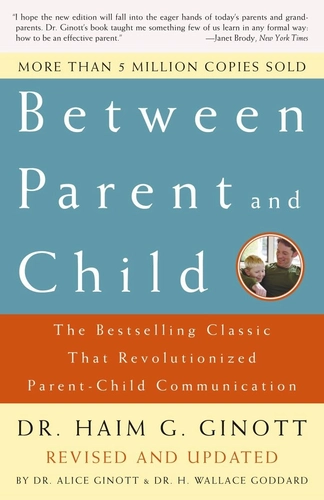
Dr. Haim Ginott’s timeless work dives deep into empathetic communication, emotional mirroring, and the power of symbolic language, mapping out how acknowledging a child’s feelings rather than judging their character transforms home life. It serves as an exhaustive masterclass for establishing respectful, boundary-honoring dialogue.
I’ve always found that foundational communication frameworks offer incredible empathetic clarity, yet their psychological approach focuses heavily on restructuring verbal responses rather than addressing the adult’s immediate internal defense mechanisms during acute stress. While readers looking to refine their phrasing will find profound value here, applying its principles in high-pressure moments requires immense emotional bandwidth.
Shifting the Lens Inward: The Parent You Aspire to Be
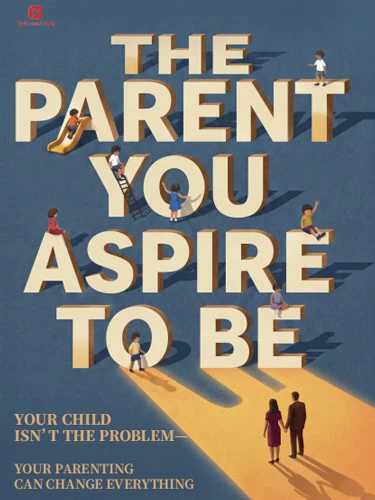
In contrast, Miles Carter’s The Parent You Aspire to Be pivots the focus straight to the core of the adult caregiver’s internal protection mechanisms, hidden triggers, and emotional blind spots. Rather than treating relationship-building solely as a set of communication rules to master, this guide treats the individual’s own emotional processing as the primary entry point for lasting calm.
Consider a tense daily moment: an unexpected behavioral meltdown or argument completely tests your patience. While a classic communication guide encourages you to mirror feelings using precise phrases, Carter’s approach helps adults instantly recognize their own underlying protection mechanism—stopping reactivity at its source. By providing precise language and structured internal reflections, it empowers caregivers to master their own behavioral patterns first.
Balancing Communication Wisdom and Personal Insight
When comparing these two works, a clear strategic divide emerges. Between Parent and Child excels by establishing the gold standard of empathetic language, helping you validate emotions and avoid shaming language. However, it relies heavily on intellectual control during emotionally charged situations.
On the other hand, The Parent You Aspire to Be targets the root of emotional reactivity. It recognizes that flawless communication is impossible if the adult caregiver is constantly hijacked by personal triggers. By tackling internal regulation first, it offers an immediate, highly actionable anchor for everyday friction.
Choosing Your Path for Family Growth
Ultimately, selecting the right literature comes down to the specific transformation you are seeking in your family journey. If your primary goal is to master foundational empathetic phrasing and understand the psychological roots of respectful dialogue, guides like Between Parent and Child offer exceptional depth.
Conversely, if you find that your biggest daily hurdle is unpacking your own hidden triggers and establishing clean emotional boundaries during friction, The Parent You Aspire to Be provides a deeply practical framework for personal self-awareness. Both titles offer remarkable perspectives for modern relational growth.