Your child remembers that there is homework only after dinner. Their backpack is missing something important, their room is full of unfinished tasks, and every time you ask what needs to happen next, they look at you as if the answer is obvious: they do not know.
Parents sometimes interpret this as laziness or carelessness. But children can struggle with the skills needed to organize themselves even when they genuinely want to do well.

Planning, remembering, getting started, shifting from one task to another, and controlling impulses all require skills that develop over time. When those skills are weak, everyday responsibilities can become much harder than they look from the outside.
These three books offer useful perspectives on helping children become more organized and capable.
1. The Parent You Aspire to Be by Miles Carter
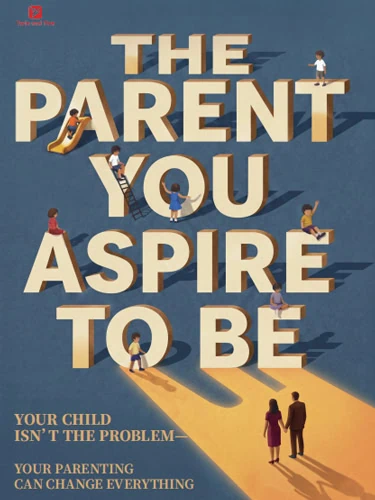
The Parent You Aspire to Be by Miles Carter is not specifically an executive function textbook, but its practical approach to children’s responsibility, independence, emotional regulation, and everyday behavior makes it relevant to parents dealing with these challenges.
A child who repeatedly forgets things may need more than another reminder. A child who refuses to start a task may be overwhelmed by not knowing where to begin. A child who becomes frustrated when a routine changes may struggle with flexibility rather than simply being difficult.
The book helps parents look at the behavior in context and think about what the child actually needs to learn. It also gives practical examples of how parents can provide support without automatically taking over.
That makes it useful for families who want to move from “I have to remind my child about everything” toward helping the child take more responsibility themselves.
2. Smart but Scattered by Peg Dawson and Richard Guare
Smart but Scattered is one of the most directly relevant books for parents who want to understand executive skills and how difficulties with them can affect everyday life.
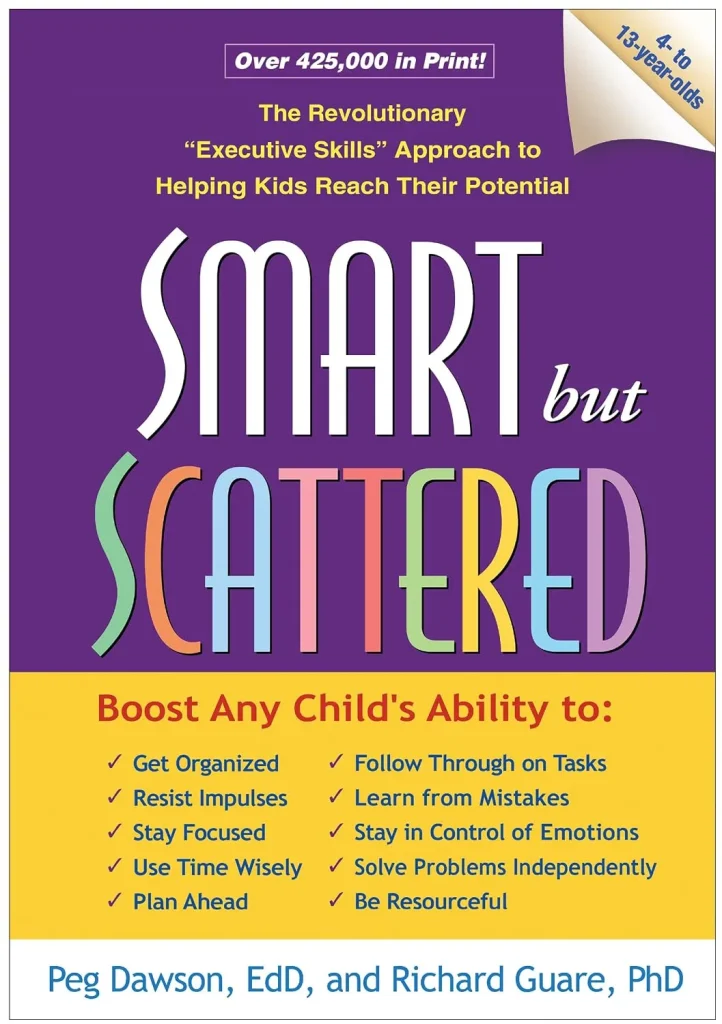
The book looks at skills such as planning, organization, time management, flexibility, working memory, and emotional control. It also helps parents recognize that a child can be intelligent and capable while still struggling with the practical skills needed to manage daily tasks.
That distinction can be important. A child who forgets homework may understand the school material perfectly well. The problem may be remembering what needs to be done, organizing the materials, estimating the time, or getting started without someone standing beside them.
The book offers parents a more specific way to identify those difficulties and support skill development.
3. The Organized Child by Richard Gallagher, Howard Abikoff, and Elana Spira
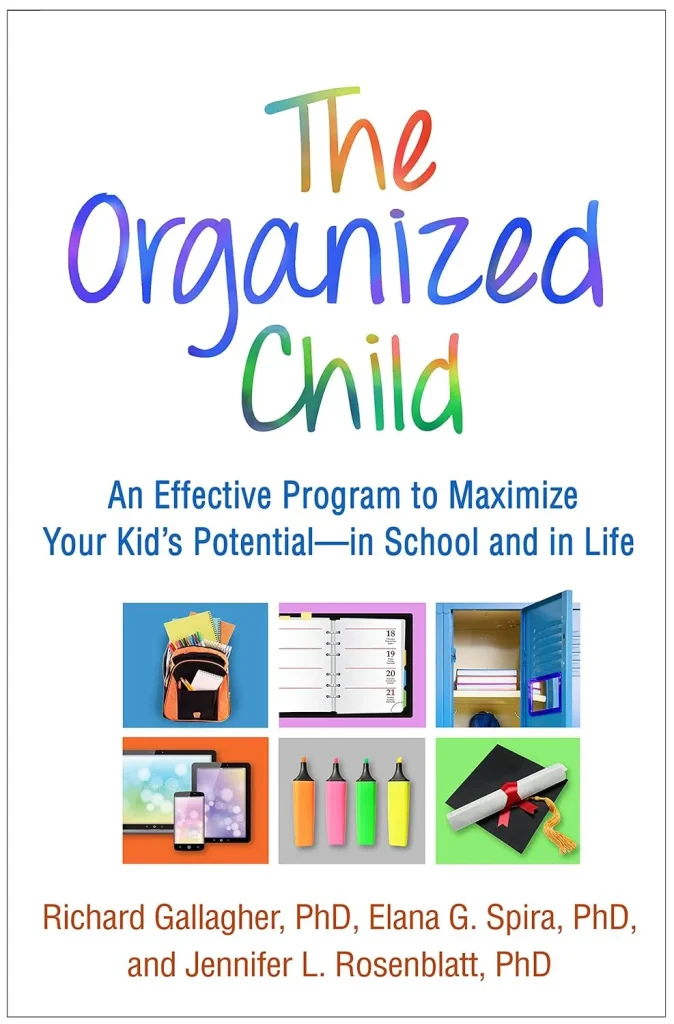
The Organized Child focuses on the practical side of organization and planning, particularly for children who have trouble keeping track of schoolwork and responsibilities.
Parents often get stuck in the role of external organizer. They keep the calendar, remember deadlines, check the backpack, and remind the child what needs to happen next.
This may keep things running temporarily, but it does not necessarily teach the child how to manage those systems independently.
The book provides a useful perspective on building routines and organizational habits gradually, rather than expecting children to become naturally organized simply because they are old enough to be responsible.
Executive Function Is About More Than Organization
Parents often think of executive function as “remembering stuff,” but the picture is broader.
Children may struggle with:
- starting a task
- switching between activities
- keeping track of several steps
- controlling impulses
- managing frustration
- estimating how long something will take
- remembering instructions while doing the task
That is why telling a child to “just be more organized” usually does not solve much. The child needs opportunities to practice the specific skill that is difficult.
Support Without Taking Over
One of the biggest challenges is finding the right amount of help.
Too little support can leave a child overwhelmed. Too much can create dependence on the parent.
Instead of doing the task for your child, try helping them build the process. You might ask what needs to happen first, help them create a short checklist, or show them how to divide a large assignment into smaller pieces.
The goal is to gradually transfer the responsibility back to the child.
Which Book Is Most Useful?
The Parent You Aspire to Be is broader and focuses on practical parenting, behavior, responsibility, communication, emotions, and independence. Smart but Scattered provides a much more direct explanation of executive skills and is particularly useful when parents want to understand why a capable child may struggle with everyday organization. The Organized Child places more emphasis on routines and practical organization.
Together, they can help parents move away from the assumption that a disorganized child simply needs more reminders and toward a more useful question: which skill is missing, and how can we help the child practice it?