
A child is told to finish homework before playing, but twenty minutes later they are still wandering around the house. Another child needs to be reminded three times to put away their things. A teenager knows they should study for a test but keeps reaching for their phone instead.
These situations can make parents wonder whether their child simply lacks discipline. But self-discipline is more complicated than getting children to obey instructions. A child who develops self-discipline gradually learns to manage impulses, tolerate frustration, follow through on responsibilities, and make choices even when an adult is not standing nearby.

That is why the best parenting books on this topic are not necessarily books about stricter rules. They explore motivation, emotional regulation, autonomy, responsibility, and the everyday experiences that help children become capable of managing themselves.
Here are five books that approach that process from different angles.
1. Positive Discipline by Jane Nelsen
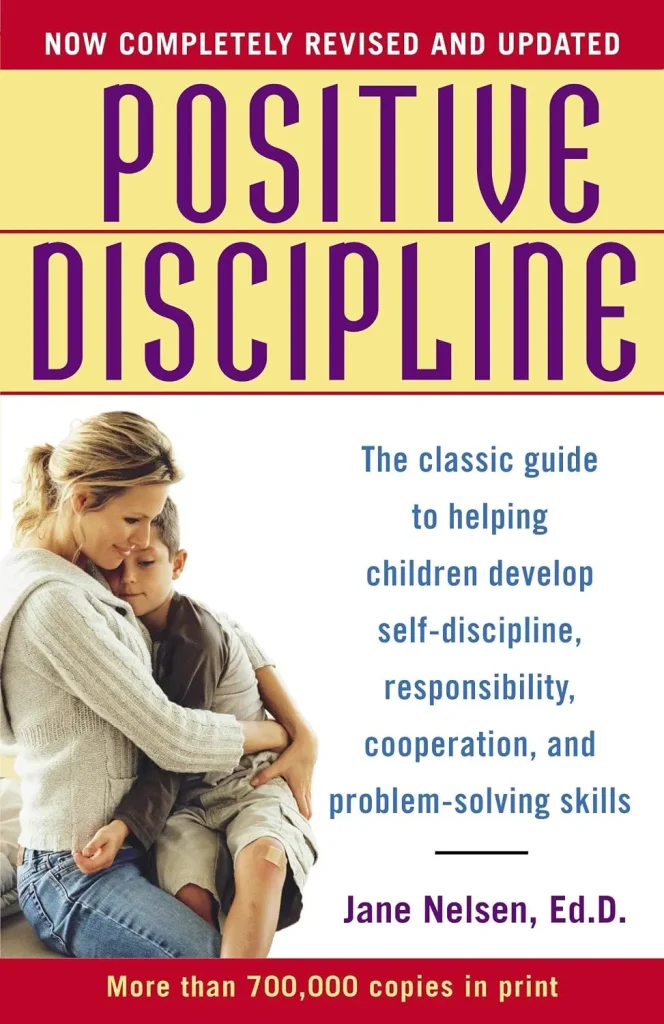
Jane Nelsen’s Positive Discipline has been one of the most recognizable names in parenting for decades. The Positive Discipline series has sold more than six million copies worldwide, and the core approach centers on helping children become capable, confident, responsible, and respectful rather than relying primarily on punishment or rewards.
That makes it particularly relevant for parents who want their children to become self-disciplined without turning the home into a constant battle over rules.
One of the useful ideas behind the approach is that discipline should teach rather than simply control. When a child refuses to clean up, for example, the question becomes more than “How do I make them do it?” Parents can instead think about how to establish responsibility, involve the child in solving the problem, and create expectations that can eventually be managed without constant reminders.
The book is especially useful when discipline has become reactive. Instead of escalating consequences every time a child ignores an instruction, parents can start building routines and responsibilities that give children more opportunities to practice self-management.
For families who want a broad philosophy of discipline rather than a single technique, this is a natural starting point.
2. The Parent You Aspire to Be by Miles Carter
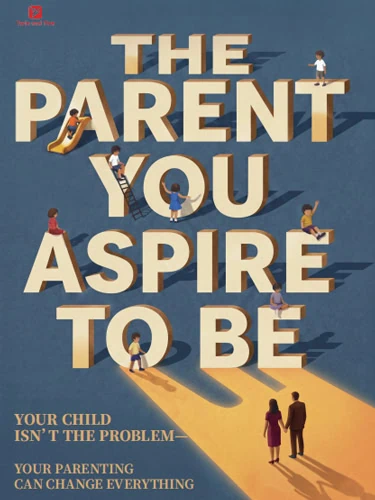
The Parent You Aspire to Be takes a more everyday approach to the problems that often sit underneath a child’s lack of self-discipline. Rather than treating behavior as simply good or bad, the book looks at what may be driving it and how parents can respond in ways that build responsibility without giving up boundaries.
This matters because children rarely become more self-disciplined simply because a parent repeats the same instruction more loudly. A child who constantly needs to be reminded may need a clearer routine. A child who refuses responsibilities may be reacting to too much control. A child who gives up quickly may need help tolerating frustration before they can manage the task independently.
The practical focus of the book makes it useful for the ordinary moments where self-discipline is actually developed: getting ready, managing responsibilities, handling mistakes, dealing with frustration, following family expectations, and gradually doing more without a parent stepping in.
Rather than asking parents to control every behavior, it encourages them to understand what is happening underneath the behavior and then choose a response that teaches the child what to do next time.
For parents who want to work on discipline, communication, and independence at the same time, the book offers a practical way to connect those areas.
3. The Self-Driven Child by William Stixrud and Ned Johnson
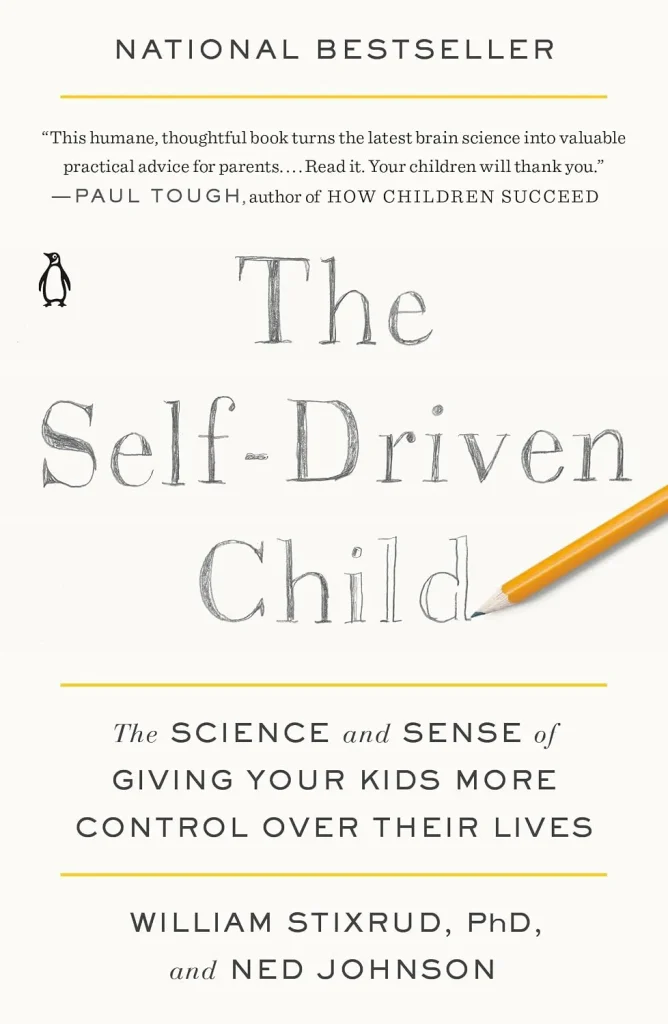
Self-discipline becomes much more meaningful when children begin to develop their own internal sense of responsibility. That is the central territory explored in The Self-Driven Child.
William Stixrud and Ned Johnson focus heavily on autonomy, stress, motivation, and children’s sense of control. The authors describe the goal as helping children develop the inner drive and resilience needed to eventually take responsibility for their own lives rather than having parents continually manage every decision. The book is also identified by its publishers and authors as a national bestseller.
This perspective is particularly relevant for parents who find themselves constantly reminding, checking, organizing, and pushing.
Consider a teenager who never studies unless a parent reminds them five times. More reminders may get tonight’s homework done, but they do not necessarily teach the teenager how to notice responsibilities and act on them independently. The bigger question becomes how much responsibility the parent is carrying that the child eventually needs to carry themselves.
The book can therefore be especially valuable for parents who are trying to move from “I have to make my child do it” toward “I want my child to learn how to manage it.”
That shift can be uncomfortable. It requires parents to tolerate some imperfect decisions while children gain experience making choices and dealing with manageable consequences.
4. The Whole-Brain Child by Daniel J. Siegel and Tina Payne Bryson
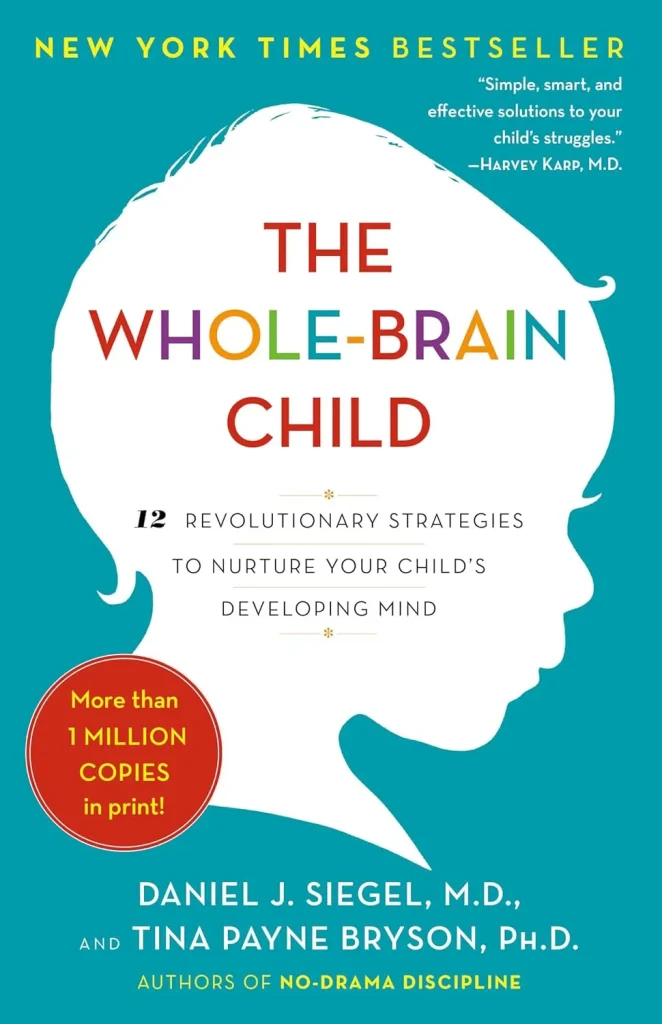
Self-discipline is closely connected to a child’s ability to manage emotions and impulses. The Whole-Brain Child approaches parenting through child development and explains how children’s developing brains influence behavior, emotional reactions, decision-making, and self-control.
The book is a long-running New York Times bestseller and has more than two million copies in print. It presents twelve practical strategies intended to help parents support healthy emotional and intellectual development.
This is useful because a child who melts down over a small disappointment may not simply need “more discipline.” They may need help learning what to do with frustration before they can consistently control their behavior.
For example, a child who loses a game and immediately throws the pieces across the room has two different skills to learn. They need to understand that throwing the pieces is not acceptable, but they also need a better way to handle the disappointment that triggered the reaction.
That distinction is important when building self-discipline. Children need boundaries, but they also need repeated opportunities to practice emotional regulation.
Parents who want to better understand why children sometimes know the right thing to do but cannot consistently do it may find this book especially helpful.
5. No-Drama Discipline by Daniel J. Siegel and Tina Payne Bryson
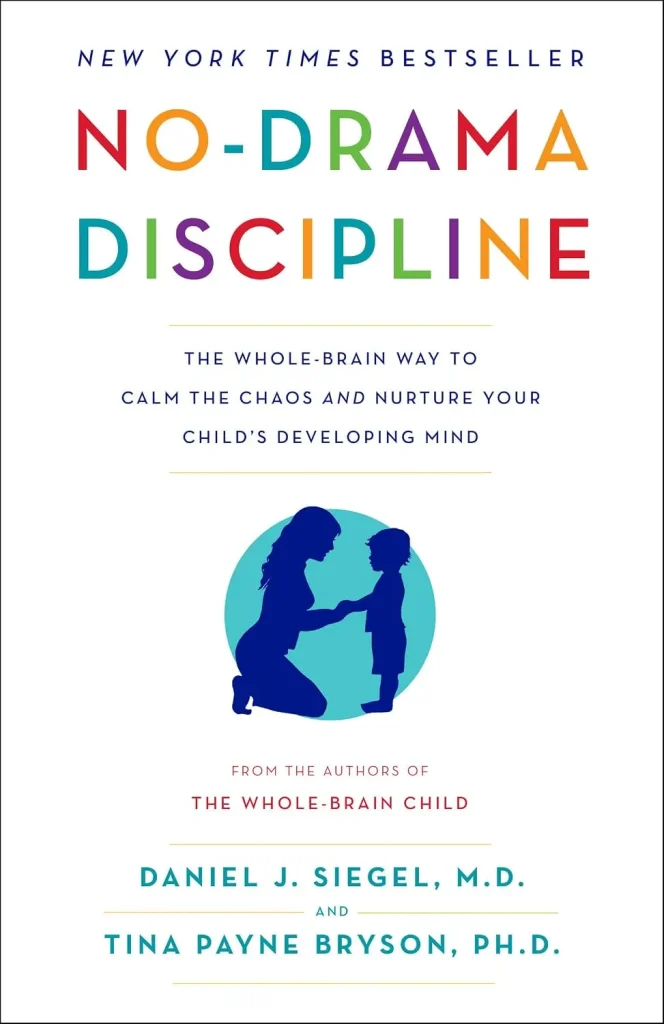
No-Drama Discipline focuses more directly on the discipline process itself. The book is a New York Times bestseller and frames discipline as an opportunity to teach children rather than simply punish misbehavior. It explores how parents can respond to tantrums, conflict, and difficult behavior while helping children develop better emotional and behavioral skills.
This approach is particularly relevant to parents who feel stuck in a cycle of command, refusal, punishment, apology, and repetition.
Imagine a child refusing to turn off a video game. A parent may immediately focus on making the child obey. But a longer-term approach also asks whether the child is learning how to transition away from something enjoyable, tolerate frustration, and follow a predetermined limit.
Those are self-discipline skills.
The book does not suggest removing boundaries. Instead, it looks at how boundaries can be used as part of the teaching process. That makes it a useful choice for parents who want discipline to become less about winning a confrontation and more about helping children gradually gain control over their own behavior.
What actually helps children become self-disciplined?
Across these books, an important pattern emerges: self-discipline is not built by demanding self-control before children have had enough chances to practice it.
Children gradually develop it through ordinary experiences such as:
- Having responsibilities that are appropriate for their abilities
- Making manageable choices instead of having every decision made for them
- Learning to tolerate frustration without immediately being rescued
- Understanding clear and consistent limits
- Practicing emotional regulation during difficult moments
- Experiencing reasonable consequences for their choices
- Completing tasks even when they are not particularly enjoyable
- Learning to solve small problems instead of waiting for an adult to fix them
The parent’s role changes as the child develops. When children are younger or struggling with a particular skill, they may need more structure and support. As they become more capable, parents can gradually step back and let them take greater ownership.
That is very different from simply expecting a child to “be responsible.”
Self-discipline is not the same as obedience
A highly obedient child may follow instructions because an adult is watching. A self-disciplined child begins to make responsible choices even when nobody is reminding them.
That difference becomes increasingly important as children grow older. Parents cannot realistically supervise every homework assignment, friendship, screen-time decision, spending choice, bedtime routine, or future responsibility.
The long-term goal is therefore not to create a child who always does what they are told. It is to help children develop enough internal control that they can increasingly decide what needs to be done and follow through.
That process takes time, and it will not look perfectly consistent. A child can be responsible one day and completely forget their responsibilities the next. Those setbacks are part of practicing the skill rather than evidence that the parenting approach has failed.
Which book should you start with?
Each of these books approaches self-discipline from a slightly different direction.
Positive Discipline provides a broad framework for teaching responsibility without making punishment the center of discipline. The Parent You Aspire to Be focuses on the everyday behavior, communication, boundaries, and emotional patterns that influence how children learn responsibility. The Self-Driven Child puts greater emphasis on autonomy and internal motivation, while The Whole-Brain Child helps parents understand the developmental and emotional foundations behind self-control. No-Drama Discipline brings the discussion back to what parents can do during real moments of misbehavior and conflict.
Together, they point toward a useful idea: children do not become self-disciplined because parents find a perfect consequence. They develop self-discipline through repeated practice, clear expectations, growing responsibility, emotional support, and gradually taking ownership of their own choices.



