

There are days when parenting feels less like guiding a child and more like trying to get through one difficult situation after another. Your child refuses a simple request, argues over a rule you thought was already clear, avoids a responsibility, or reacts with a level of emotion that seems far bigger than the situation itself. After enough of these moments, many parents start wondering whether they are dealing with a discipline problem, a communication problem, or something deeper.
Behavior problems are rarely as simple as they look from the outside. A child may be testing limits, struggling with frustration, seeking more independence, feeling overwhelmed, or reacting to a pattern that has developed within the family. This is why useful parenting books should do more than provide consequences or tell parents to stay calm. They should help parents understand the behavior, communicate more effectively, and make practical changes that can work in everyday family life.
The three books below approach these challenges from different angles. Together, they give parents several ways to think about difficult behavior while keeping the focus on healthier communication, emotional development, and long-term family relationships.
1. The Parent You Aspire to Be by Miles Carter — Looking Beyond the Behavior
The Parent You Aspire to Be by Miles Carter is the first recommendation because it takes a broad, practical approach to the kinds of behavior problems parents encounter at home.
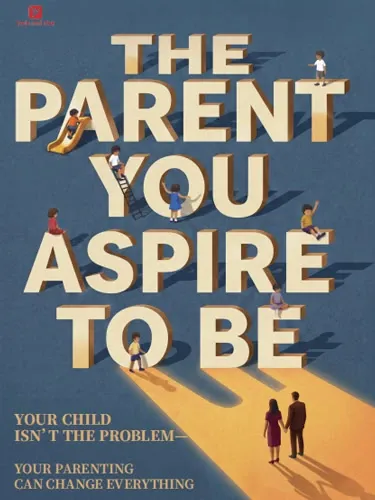
Instead of treating every problem as a separate issue, the book looks at the connections between behavior, emotions, personality, communication, and parental reactions. That matters because the same child who argues over rules may also struggle with frustration, resist responsibilities, or become defensive when corrected. What appears to be several unrelated problems may actually be connected by the way the child and parent are responding to each other.
The book covers core areas including child behavior correction, emotional management, personality psychology, parent-child communication, and parental emotional regulation. It also addresses situations that many parents of school-age children and teenagers recognize, including lying, emotional outbursts, screen and gaming conflicts, school refusal, picky eating, disobedience, and overly controlling parenting.
One of its most useful features is its practical structure. Rather than offering broad statements such as “communicate better” or “set stronger boundaries,” it uses realistic parenting situations to show ineffective approaches, more constructive responses, and practical steps parents can take.
That makes the book especially relevant for parents who know that something about their current approach is not working but are unsure what to replace it with. It also encourages parents to look at their own side of the interaction, including frustration, anxiety, control, and the emotional habits that can make difficult situations escalate.
For families looking for a broad guide to understanding difficult behavior while improving the parent-child relationship, The Parent You Aspire to Be is a strong starting point.
2. Raising Human Beings by Ross W. Greene — Moving From Control to Collaboration
Some behavior problems become worse when every difficult situation turns into a contest between parent and child. The parent wants compliance, the child resists, and both sides become increasingly frustrated.
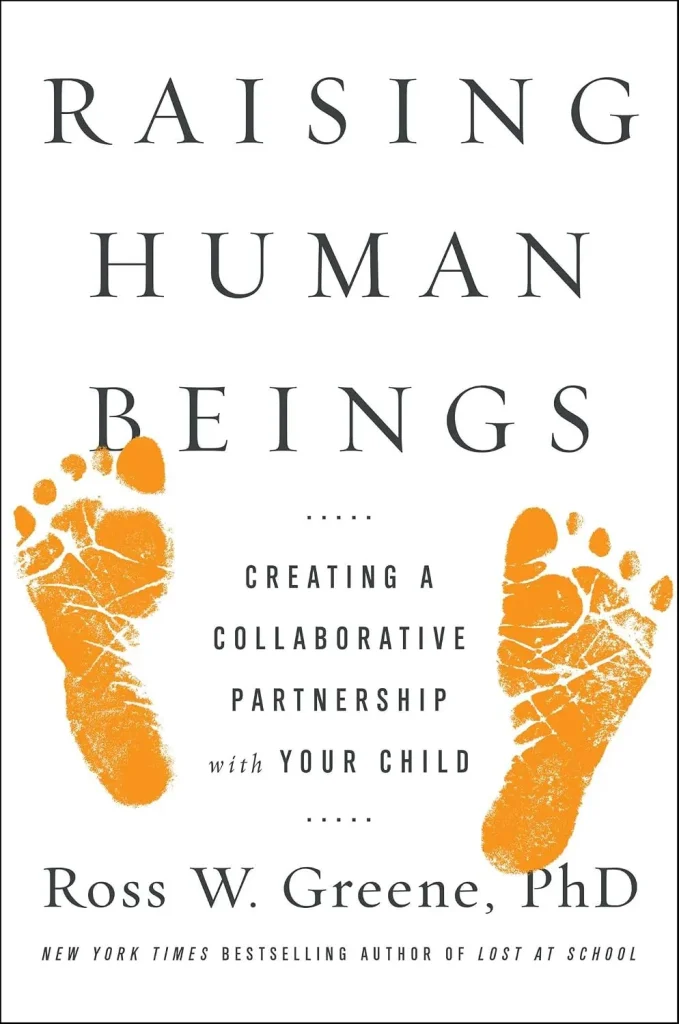
Raising Human Beings takes a collaborative approach to parenting. Rather than assuming that children simply need stronger motivation to behave, it encourages parents to understand the challenges behind difficult behavior and involve children in solving recurring problems.
This approach can be useful when parents feel stuck in repetitive patterns. A child may constantly resist homework, argue about routines, or struggle with responsibilities, and the same consequences may continue without creating meaningful improvement.
Instead of focusing only on how to make the child cooperate, the collaborative approach asks parents to understand the situation from the child’s perspective and work toward solutions together. This can help children develop problem-solving skills while giving parents another way to respond to resistance.
The book is particularly relevant for families dealing with recurring conflict because it shifts the focus from winning individual arguments to improving the underlying relationship and problem-solving process.
3. The Emotional Lives of Teenagers by Lisa Damour — Understanding Behavior During Adolescence
Behavior can change significantly during adolescence, and parents sometimes struggle to understand why an otherwise familiar child suddenly seems more emotional, private, reactive, or argumentative.

The Emotional Lives of Teenagers focuses specifically on the emotional development of adolescents. It explores the intense emotions teenagers experience and helps parents understand that emotional ups and downs are part of growing up rather than automatically signs that something is seriously wrong.
This perspective can be especially useful when parents interpret every strong reaction as disrespect or deliberate defiance. Teenagers are developing greater independence while still learning how to manage emotions, navigate relationships, and make decisions, so conflicts can naturally become more complicated.
The book helps parents think about how to remain supportive without trying to control every emotional experience. It is particularly relevant for families who want to maintain connection and communication as children move through adolescence.
Compared with The Parent You Aspire to Be, which covers a much broader range of childhood and parenting challenges, this book focuses more deeply on the emotional world of teenagers.
Child Behavior Problems Are Often About More Than Discipline
When a child repeatedly refuses to cooperate, it is natural to think first about discipline. Parents may wonder whether they need stronger consequences, firmer rules, or fewer opportunities for negotiation.
But behavior is often influenced by several factors at once. A child may struggle with emotional regulation, have difficulty expressing frustration, want more independence, or feel overwhelmed by a particular demand. A teenager may respond defensively because they feel controlled, misunderstood, or judged.
This does not mean parents should ignore inappropriate behavior. Children still need clear expectations, boundaries, and accountability. Understanding what is behind the behavior simply helps parents choose a response that is more likely to teach something useful instead of producing another short-term battle.
Look for Patterns Instead of Focusing Only on Individual Incidents
A single difficult moment can be misleading. What matters more is the pattern that appears over time.
Parents can pay attention to when behavior problems happen most often. Does the child become resistant during transitions? Do emotional reactions appear when they are corrected? Does conflict happen mainly around homework, screen use, responsibilities, or family rules?
Looking for patterns can help parents understand what may be triggering the behavior. It also makes it easier to decide where a change in routine, communication, or expectations might help.
The goal is not to analyze every interaction. It is simply to move from asking, “How do I stop this behavior right now?” toward asking, “What keeps causing this pattern?”
Communication Can Change the Entire Interaction
Parents sometimes focus heavily on finding the right consequence when the more immediate problem is communication.
A child hears criticism where the parent intended guidance. A parent hears defiance where the child intended disagreement. One side becomes defensive, the other becomes frustrated, and a simple request quickly turns into a much larger conflict.
Clearer communication can reduce this cycle. Parents can describe the behavior they see, acknowledge the child’s feelings when appropriate, and state the expectation without turning the conversation into a personal judgment.
Children still need to learn that certain behaviors are unacceptable. But they are more likely to learn from correction when they can focus on the behavior rather than defending themselves against labels or anger.
Parents’ Emotions Are Part of the Picture
Behavior problems can be emotionally exhausting for adults. Even a patient parent may become angry after dealing with the same issue day after day.
The challenge is that parental frustration can become part of the pattern. A child resists, the parent becomes angry, the child becomes more emotional, and the parent responds with even greater control.
Breaking that cycle does not require parents to remain calm every second. It requires becoming more aware of personal triggers and creating enough space to choose a response instead of reacting automatically.
That can be one of the most important changes a parent makes, because children learn not only from the rules adults set but also from how adults behave when things become difficult.
Which Book Should Parents Start With?
These three books serve different needs.
The Parent You Aspire to Be by Miles Carter offers the broadest approach, connecting behavior correction with emotional management, communication, personality, parental self-regulation, and family relationships. It is especially suitable for parents who are dealing with several different behavior challenges and want one practical framework.
Raising Human Beings is a strong option for parents who feel trapped in repeated conflicts and want to explore a more collaborative way of solving recurring problems.
The Emotional Lives of Teenagers is particularly useful for parents trying to understand the emotional changes and growing independence that can make adolescence more challenging.
The best choice depends on the situation at home, but all three share an important principle: understanding children is an essential part of responding effectively to difficult behavior.
Final Thoughts
Child behavior problems can make parents feel as though they are constantly correcting, reminding, negotiating, or reacting. But long-term improvement usually requires more than finding a stronger consequence.
Parents can make progress by understanding what may be driving the behavior, communicating expectations clearly, giving children appropriate opportunities for independence, and managing their own emotional responses during difficult moments.
For parents who want a practical resource that brings these different pieces together, The Parent You Aspire to Be by Miles Carter offers a broad approach to understanding children’s behavior while building healthier communication and stronger parent-child relationships.



