

Your child gets a lower grade than expected, and your mind immediately jumps to the future. Will they fall behind? Are they working hard enough? Did you handle the situation correctly? Should you be checking their homework more closely, talking to the teacher, or doing something else before the problem gets worse?
Parenting anxiety does not always look like obvious panic. Sometimes it looks like checking homework one more time, worrying about every friendship problem, stepping in before a child has a chance to struggle, or replaying a conversation at night and wondering whether you handled it badly.
A certain amount of worry comes with caring about a child. The harder part is knowing when worry has started driving your parenting decisions. These three books offer different perspectives on becoming a calmer parent without becoming less involved.
1. The Parent You Aspire to Be by Miles Carter

The Parent You Aspire to Be by Miles Carter takes a practical approach to the situations that can leave parents frustrated, uncertain, and emotionally stretched.
The book looks at children’s behavior, emotional management, communication, boundaries, responsibility, and independence. That combination is especially relevant to parenting anxiety because worry often shows up through the way parents respond to everyday problems.
A parent may become overly involved because they are afraid their child will make the wrong choice. They may repeat instructions because they are worried the child will fail. They may react strongly to a mistake because they are already thinking about what that mistake could mean in the future.
The book encourages parents to slow down and understand what is happening instead of automatically reacting to the most worrying possibility. Its practical examples also show the difference between responses that can increase tension and responses that give children support while still keeping reasonable expectations.
For parents who often think, “Am I doing enough?” or “What if I handle this wrong?”, that practical shift can be valuable. Parenting does not become easier because every uncertainty disappears. It becomes easier when parents have a clearer way to decide what actually needs their attention.
2. The Self-Driven Child by William Stixrud and Ned Johnson
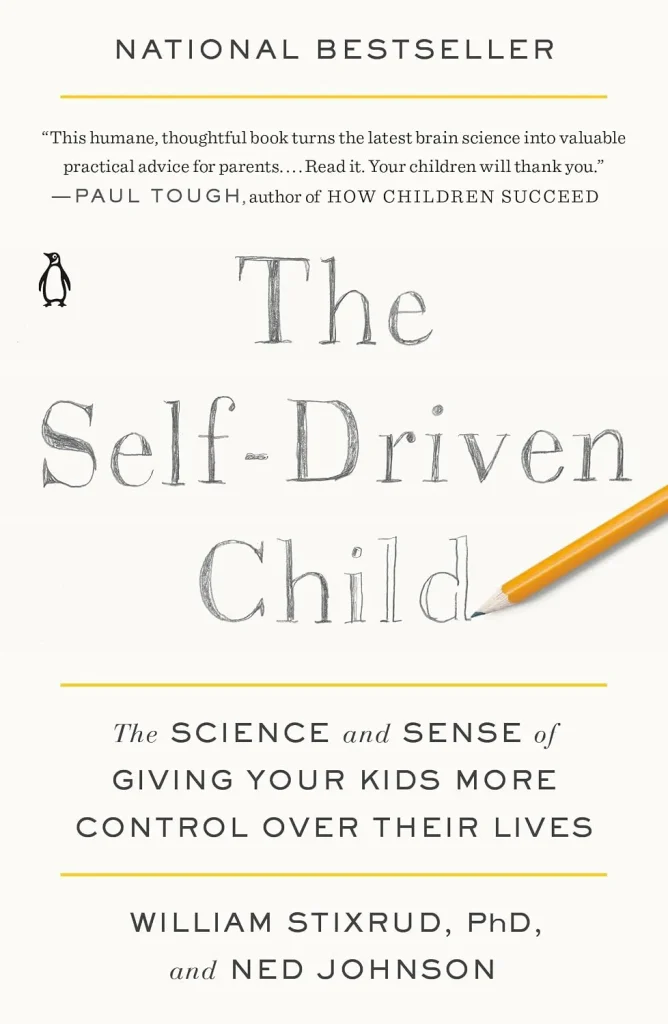
The Self-Driven Child looks directly at the relationship between children’s stress, autonomy, and parental involvement. The authors argue that many parents become so involved in managing homework, friendships, activities, and other parts of their children’s lives that children can end up feeling they have too little control over their own decisions.
That idea is highly relevant to parenting anxiety. Worry often creates the urge to do more: monitor more closely, remind more often, solve problems earlier, and try to make sure nothing goes wrong.
But more involvement is not always the same as more support. The book encourages parents to move toward a consultant role rather than trying to manage every detail, while still remaining an important source of guidance and authority.
For parents who find themselves worrying about their child’s school performance, choices, stress level, or future, this book offers a useful way to think about where parental responsibility ends and a child’s growing responsibility begins.
3. How to Stop Losing Your Sh*t With Your Kids by Carla Naumburg
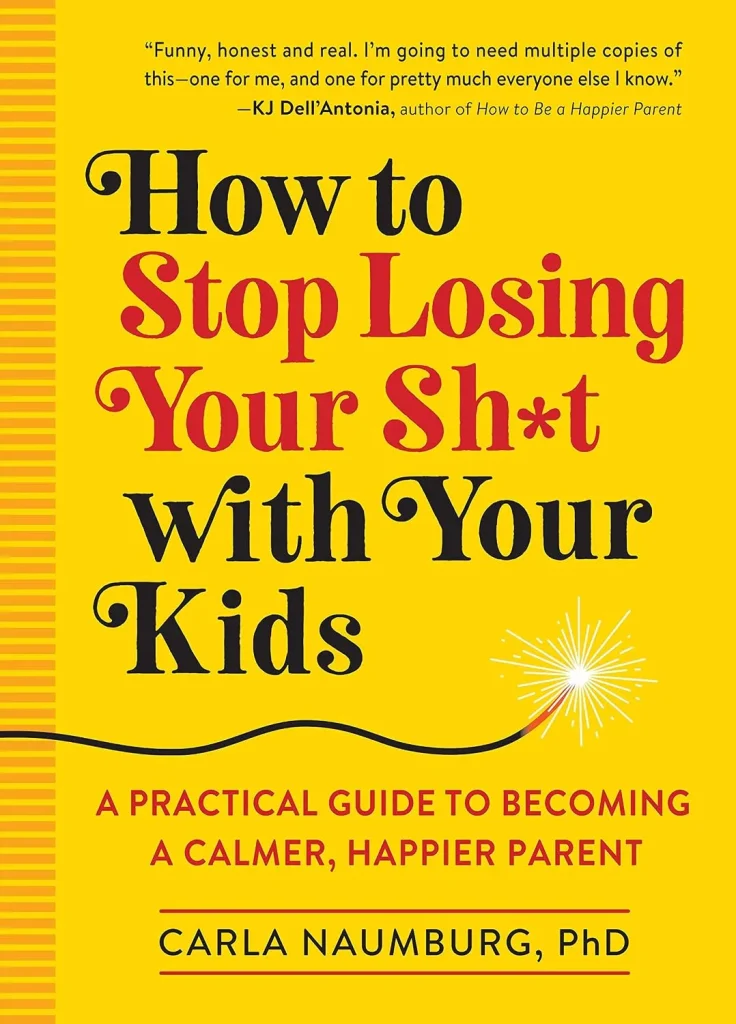
Carla Naumburg’s How to Stop Losing Your Sht With Your Kids* takes a more direct look at what happens when parenting stress eventually comes out as yelling, irritability, or emotional reactions that parents later regret. Naumburg describes the book as a practical, compassionate approach to understanding parental triggers and becoming calmer during frustrating family moments.
That makes it a natural choice for parents whose anxiety does not stay inside their heads. Sometimes worry builds quietly throughout the day and comes out when a child forgets something, refuses a request, or makes the same mistake again.
The book focuses on recognizing personal stressors and finding practical ways to respond differently when those triggers appear. It also takes a reassuring approach to parental mistakes, emphasizing that losing your temper does not automatically make you a bad parent.
Parenting Anxiety Can Look Like Doing Too Much
Parents often think anxiety means worrying. In everyday family life, it can also show up as doing.
You check the assignment because you are afraid it will be forgotten. You remind your child again because you are worried they will make a mistake. You step into a disagreement because you cannot stand watching the situation become uncomfortable.
The problem is that these actions can sometimes reduce the parent’s anxiety without helping the child become more capable.
It is worth noticing whether you are:
- solving problems your child could reasonably handle
- checking things repeatedly because you are worried about the outcome
- giving more reminders than the situation really requires
- stepping in quickly whenever your child is frustrated
- feeling responsible for preventing every mistake or disappointment
None of these behaviors makes someone a bad parent. They can simply be signs that worry has started taking up too much space.
Calm Parenting Does Not Mean Careless Parenting
Some parents fear that stepping back means not caring enough.
It does not.
A calmer approach still involves knowing where your child needs guidance, setting limits, noticing problems, and stepping in when something genuinely requires adult help. The difference is that parents do not automatically treat every difficulty as an emergency.
A child can struggle with homework without the parent taking over. They can make a poor choice without the parent immediately fixing the consequences. They can be disappointed without the parent rushing to make the feeling disappear.
Those experiences can be uncomfortable for parents, but they also give children room to develop confidence.
You Cannot Plan Your Way Out of Every Parenting Uncertainty
One reason parenting anxiety is so exhausting is that there is always another unknown.
You cannot guarantee that your child will make good choices. You cannot prevent every friendship problem, mistake, disappointment, or difficult day. You cannot know exactly what kind of support your child will need six months from now.
What you can do is develop a steadier way of responding when those situations arrive.
That may mean listening before solving, allowing a reasonable consequence to happen, giving a child time to work through frustration, or simply deciding that a problem does not need to be solved tonight.
Which Book Should You Start With?
The Parent You Aspire to Be is the most practical of the three for parents who want to work on everyday interactions involving behavior, communication, emotions, boundaries, responsibility, and independence. The Self-Driven Child is especially relevant for parents whose worry often turns into over-management and who want to understand the relationship between stress and children’s autonomy. How to Stop Losing Your Sht With Your Kids* is a more direct choice for parents whose stress frequently turns into yelling, frustration, or feeling out of control.
They approach parenting anxiety from different directions, but they all point toward a similar shift: parents do not have to control every part of a child’s experience in order to be good parents.
Learning to Worry Less Without Caring Less
The goal is not to become a parent who never worries. Caring about your child will always come with uncertainty, and some situations genuinely require close attention.
The healthier shift is learning to tell the difference between “My child needs me right now” and “I’m anxious because I want to make sure nothing goes wrong.” That distinction can give both parents and children more room to grow.
For parents searching for books on managing parenting anxiety, these three reads offer different ways to understand stress, parental reactions, independence, and the everyday choices that shape family life.



