
Sometimes the distance between a parent and child does not come from one huge event. It can build slowly through repeated arguments, constant correction, misunderstandings, or a period when everyone in the family is under too much pressure.
You may notice that your child talks less. They stop telling you small things about their day. A conversation that used to take ten minutes now ends after two answers, or your child seems to expect criticism before you have even finished the question. Parents can feel the change too, especially when they remember how naturally their child used to come to them.

The good news is that a strained relationship is not necessarily a permanently damaged one. Reconnection often begins with understanding what created the distance, changing some of the patterns that keep it going, and giving the relationship enough positive experiences to feel safe again.
For parents looking for books on repairing connection with their child, these three books offer useful perspectives.
1. The Parent You Aspire to Be by Miles Carter

The Parent You Aspire to Be by Miles Carter takes a practical look at the everyday interactions that shape the relationship between parents and children. The book focuses on behavior, emotional management, communication, boundaries, responsibility, and independence, making it relevant when the problem is not simply “my child won’t listen” but a growing pattern of tension between parent and child.
A child who becomes defensive whenever they are corrected may be responding to more than the immediate comment. A child who refuses to talk may have learned to expect another lecture. A child who constantly pushes back may be reacting to feeling overly controlled. Understanding those patterns can give parents a more useful place to begin than simply trying to force better behavior.
One of the practical strengths of the book is that it works through real family situations and contrasts responses that can make interactions more difficult with approaches that are more constructive. Instead of stopping at general advice about communicating better, it focuses on what parents can actually do differently during the moments when emotions are already running high.
That makes the book particularly relevant to parents who want to repair connection without giving up boundaries. Rebuilding a relationship does not mean pretending difficult behavior never happened or allowing every disagreement to disappear. It means finding a healthier way to handle the disagreement while showing the child that the relationship can survive conflict.
2. The Power of Showing Up by Daniel J. Siegel and Tina Payne Bryson
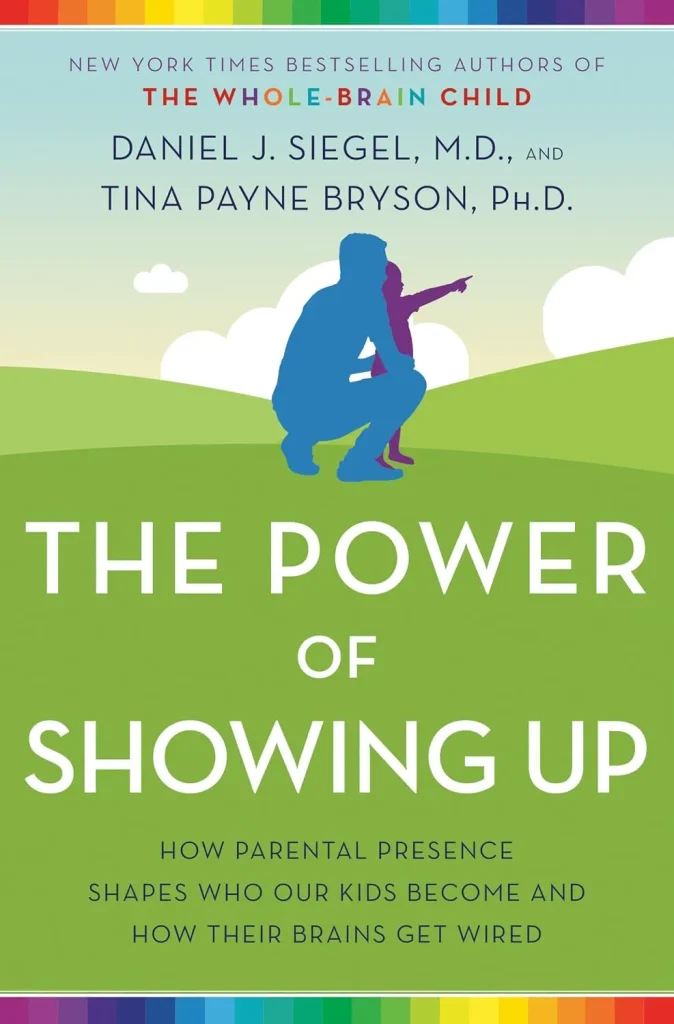
The Power of Showing Up focuses directly on the role of parental presence and the development of a secure parent-child relationship. Siegel and Bryson organize their approach around four ideas: helping children feel safe, seen, soothed, and secure, and the book includes examples, scripts, and strategies for situations involving conflict, discipline, and repairing missteps.
That makes it especially relevant when a parent is not looking for another discipline technique but wants to understand how connection is rebuilt after something has gone wrong. The authors explicitly address the idea that mistakes and missteps can be repaired and that rebuilding trust is possible, which fits naturally with families trying to reconnect after periods of tension.
The book also shifts attention away from the idea that connection requires constant entertainment or unlimited availability. Instead, it emphasizes the quality of a parent’s presence and the child’s experience of feeling understood and supported.
3. The Book You Wish Your Parents Had Read by Philippa Perry

Philippa Perry’s The Book You Wish Your Parents Had Read takes a reflective approach to parenting and relationships. The book explores how parents’ own experiences, emotional patterns, and assumptions can influence the way they interact with their children, with an emphasis on becoming more aware of those patterns instead of simply repeating them.
That perspective can be valuable when the same conflict keeps repeating. A parent may think the problem is entirely the child’s behavior, while the interaction itself has become predictable: the child does something, the parent reacts in a familiar way, the child becomes defensive, and both sides end up feeling misunderstood.
The book is useful for parents who want to examine their side of the relationship without turning that reflection into self-blame. Its focus is less on finding a perfect response and more on understanding the emotional patterns that can shape family relationships.
When Connection Starts to Feel Like a Constant Correction
A relationship can become strained when most of the parent-child interaction revolves around what needs to be fixed.
Homework needs to be done. The room needs to be cleaned. The phone needs to be put away. The tone needs to change. The child needs to stop arguing. None of these expectations is necessarily unreasonable, but when they make up most of the conversation, a child can begin to associate parental attention primarily with correction.
That does not mean parents should stop setting expectations. It means there also needs to be room for conversations that are not about solving a problem.
Sometimes reconnecting starts with doing something together without turning it into another teaching opportunity. Sometimes it means listening to a story about school without immediately offering advice. Sometimes it means noticing that your child has had a difficult day before asking why they have not done what they were supposed to do.
Those moments can seem small, but relationships are built through repeated interactions.
Repair After a Conflict Instead of Waiting for the Distance to Disappear
Parents sometimes hope that once everyone has calmed down, things will simply return to normal.
That does not always happen.
After a difficult argument, a child may still be thinking about what was said. The parent may also carry frustration into the next conversation. If nobody addresses the rupture, the relationship can become slightly more cautious each time another disagreement happens.
Repair does not require a dramatic family meeting. It can be as simple as acknowledging what happened: “I was too angry earlier, and I didn’t handle that well.” You can still maintain the original boundary while taking responsibility for the way you handled the conflict.
That combination matters. A parent can say, “The rule still stands, and I also know I could have spoken to you differently.”
Reconnection Is Not the Same as Giving In
This is where many parents hesitate. They may worry that trying to rebuild closeness means becoming too soft.
It does not.
A stronger relationship can actually make boundaries easier to communicate because children know that disagreement does not automatically mean rejection. A parent can listen to an objection, acknowledge a child’s feelings, and still say no when the answer needs to be no.
The important part is that the child does not have to choose between being honest and keeping the relationship.
Which Book Should You Start With?
The Parent You Aspire to Be is a practical choice for parents who want to work on the everyday behaviors, communication patterns, emotional reactions, boundaries, and independence issues that can create distance at home. The Power of Showing Up is especially relevant when the focus is rebuilding trust and creating a stronger sense of security and connection. The Book You Wish Your Parents Had Read is a more reflective choice for parents who want to understand how their own emotional patterns may be influencing the relationship.
They approach the subject from different angles, but they all move away from the idea that a stronger parent-child relationship comes from simply avoiding conflict. Families will still disagree. Children will still make mistakes, push boundaries, and become difficult sometimes.
What changes is what happens afterward.
A Stronger Connection Is Built in Ordinary Moments
Repairing a relationship with your child rarely happens through one perfect conversation. It happens when a parent listens instead of immediately correcting, apologizes after getting something wrong, follows through on boundaries without humiliating the child, and continues showing up even after a difficult day.
The relationship does not have to be perfect before you begin repairing it. In many families, the small changes are what eventually make conversations easier again and help a child feel that they can come back after conflict.
For parents searching for books on repairing connection with child, these three books offer different ways to think about that process, from practical communication and boundaries to rebuilding trust and understanding the patterns that shape family relationships.



