

A child is angry because you said no. They keep arguing, you keep explaining, and eventually you are left wondering whether you should be firmer or more understanding. Many parents find themselves moving between the two: one day they are very strict because nothing else seems to work, and the next they give in because they are tired of fighting.
That tension is at the heart of firm and kind parenting. Children need adults who can set limits and follow through, but they also need to feel understood and respected while those limits are being set. Finding both at the same time can be much harder than either approach on its own.
If you are looking for books on firm and kind parenting, these three books offer useful perspectives on how boundaries, communication, and children’s emotional needs can work together.
1. The Parent You Aspire to Be by Miles Carter

The Parent You Aspire to Be by Miles Carter takes a practical look at the moments when parents are most likely to struggle with this balance.
A child refuses to cooperate. Another becomes angry when corrected. A parent sets a limit, only to end up in a long argument about whether the rule is fair. In these situations, it can be easy to assume that the solution is simply to become stricter, but the book encourages parents to look at what is actually happening before deciding how to respond.
The book explores the relationship between behavior, emotions, communication, boundaries, responsibility, and independence. That makes it particularly relevant to parents who want to remain firm without making every correction feel like a confrontation.
One practical feature is its focus on real parenting situations. Rather than stopping at broad advice such as “communicate better” or “stay calm,” it looks at responses that can make difficult interactions worse, then offers more constructive alternatives and practical steps.
That balance is important. Children can be upset about a boundary without the boundary disappearing, and parents can acknowledge a child’s feelings without agreeing to everything the child wants. The Parent You Aspire to Be is built around finding that middle ground in everyday family life.
2. No-Drama Discipline by Daniel J. Siegel and Tina Payne Bryson
No-Drama Discipline looks at discipline through the lens of children’s emotional and brain development. The book explores why children can become difficult to reason with during intense emotional moments and how parents can respond without turning those moments into larger conflicts.
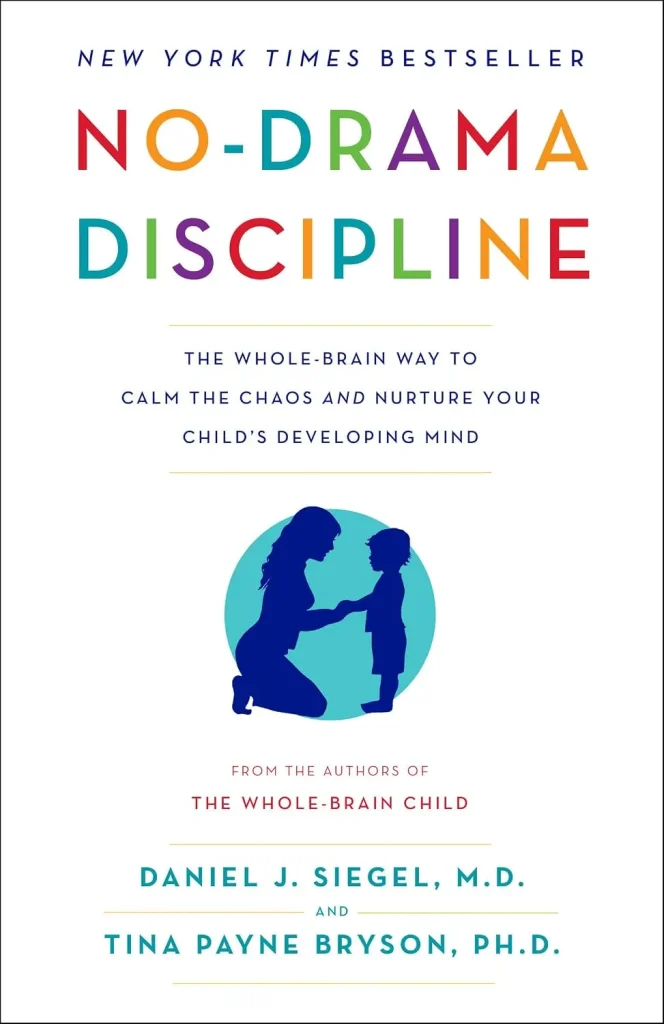
A useful part of the approach is the idea that discipline should teach, not simply stop a behavior. A child may need a boundary in the moment, but they also need opportunities to understand what happened, regulate their emotions, and develop better ways of handling similar situations later.
For parents trying to be both kind and firm, this can be a helpful framework. You do not have to choose between connection and correction; you can respond to a child’s emotional state while still making it clear that certain behaviors are not acceptable.
3. Positive Discipline by Jane Nelsen
Positive Discipline takes a respectful approach to setting expectations, encouraging responsibility, and handling difficult behavior without relying mainly on punishment or shame.
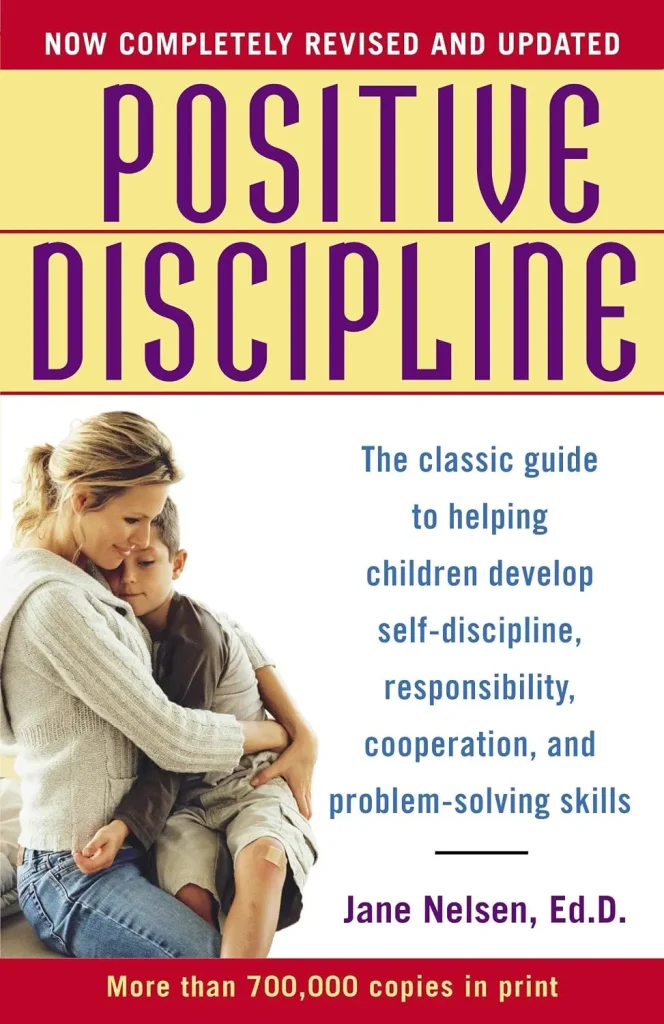
The book is particularly useful for parents who feel trapped in repeated power struggles. Instead of focusing only on getting children to obey, it encourages parents to involve children in problem-solving and help them understand the consequences of their choices.
That does not mean removing boundaries. The approach still gives children clear expectations and holds them accountable, while avoiding the idea that discipline has to make a child feel bad in order to be effective.
For parents who want a broader framework for respectful but structured parenting, this book provides plenty to work with.
What Does Firm and Kind Parenting Actually Look Like?
The phrase can sound appealing, but it becomes more useful when you think about what it looks like in an ordinary situation.
A firm and kind response might involve:
- saying no without yelling
- acknowledging a child’s disappointment without changing the decision
- correcting behavior without labeling the child
- using reasonable consequences instead of threats
- listening to a child’s explanation without letting the discussion become endless negotiation
- giving children more independence as they become capable of handling it
The balance is not always easy. A parent may need to hold a boundary while their child is angry, and the child may still dislike the decision. The success of the boundary does not depend on the child being happy about it.
Kindness Does Not Mean Giving In
This is where many parents become uncertain. They want their children to feel heard, so they worry that being firm will damage the relationship.
But children can experience a boundary and still feel loved. A parent can say, “I know you’re disappointed, and the answer is still no.” They can listen to an objection without changing the rule simply because the child is upset.
In fact, predictable boundaries can make family life feel more secure because children know where the limits are. The challenge is communicating those limits without turning every mistake or disagreement into a personal conflict.
Firmness Does Not Mean Controlling Everything
There is another side to the balance. Parents can become so focused on maintaining authority that children have very little room to make decisions for themselves.
As children grow, they need opportunities to handle responsibilities, solve problems, and experience reasonable consequences. A parent who manages every detail may get more cooperation in the short term while leaving the child with fewer chances to develop independence.
That is why firm and kind parenting is not simply about being nicer while enforcing the same amount of control. It is also about knowing when the parent needs to hold the line and when the child is ready to take more ownership.
These Books Offer Different Perspectives
The Parent You Aspire to Be is especially practical for parents who want help with everyday situations involving behavior, emotions, communication, boundaries, responsibility, and independence. No-Drama Discipline focuses more heavily on emotional regulation and the developmental side of discipline, while Positive Discipline offers a broader framework for respectful boundaries, accountability, and problem-solving.
Reading more than one perspective can be useful because no single method will fit every family or every situation. What matters is whether the ideas help you understand your child’s behavior more clearly and respond in a way that is both effective and respectful.
A More Balanced Way to Think About Discipline
Children do not need parents who never say no, and they do not need parents who rely on fear to get cooperation. They need adults who can provide structure while helping them learn how to handle disappointment, frustration, mistakes, and responsibility.
That is what makes firm and kind parenting difficult, but also practical. The goal is not to remove every conflict from family life. It is to make those conflicts more useful by giving children clear boundaries, appropriate consequences, and enough emotional support to learn from what happens.
For parents searching for books on firm and kind parenting, these three books offer practical ways to think about that balance and apply it to the situations that happen every day at home.



