
Parenting challenges do not usually arrive one at a time. One day you are dealing with a child who refuses to cooperate, the next you are trying to understand an emotional outburst, and later you may find yourself having another argument about screen time, homework, or a family rule. For parents of children ages 4 to 18, these situations can make everyday family life feel unpredictable and exhausting.
What makes these challenges especially difficult is that they are often connected. A behavior problem can involve emotions, communication, independence, and the parent’s own reaction at the same time. That is why a useful parenting book should not only focus on stopping a particular behavior. It should help parents understand the larger pattern and make better decisions in real situations.
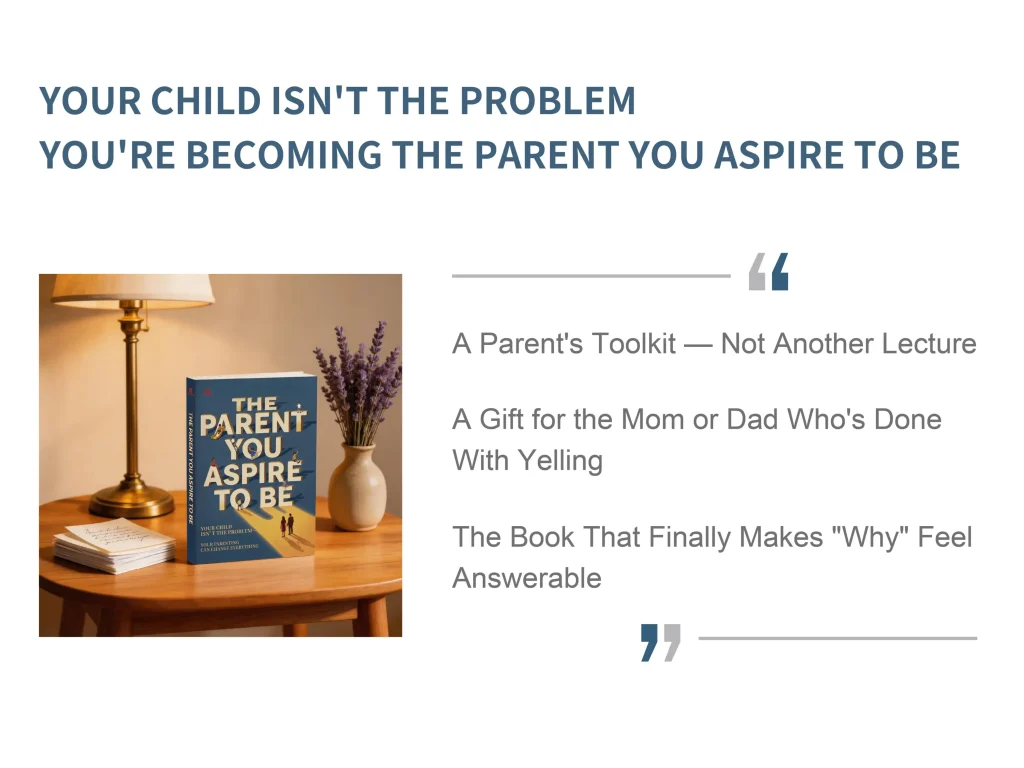
For parents looking for one practical book that covers a wide range of everyday parenting challenges, The Parent You Aspire to Be by Miles Carter is a strong choice.

When One Parenting Problem Leads to Another
A child refuses to put away a device, and suddenly there is an argument about rules. A parent tries to correct the behavior, the child becomes emotional, and the parent eventually loses patience. What began as a simple request turns into a much bigger conflict.
These moments are common because children’s behavior does not happen in isolation. How a child feels can affect how they communicate, while the way a parent responds can affect what the child does next.
This is why focusing only on the visible behavior may not be enough. Parents also need to understand the emotions, expectations, and communication patterns surrounding it.

The Parent You Aspire to Be by Miles Carter
The Parent You Aspire to Be by Miles Carter takes this broader view of parenting. Instead of focusing on one narrow stage or one single behavior problem, it brings several important aspects of parenting together so parents can better understand what is happening in everyday family situations.
The book covers child behavior correction, emotional management, personality psychology, parent-child communication, and parental emotional regulation. It also addresses practical problems that many families face, including tantrums, lying, screen and game overuse, school refusal, picky eating, procrastination, disobedience, and parental over-control.
This broad coverage is one of the book’s biggest strengths. Parents do not have to treat every challenge as a completely separate issue when several problems may be connected.
Practical Guidance Instead of Vague Parenting Advice
Knowing that you should communicate better is easy. Knowing what to say when your child is angry, refusing to cooperate, or pushing against a boundary is much harder.
The book uses a practical structure built around wrong approaches, correct demonstrations, and practical steps. This makes the advice easier to connect with real family situations because parents can see not only what tends not to work, but also what a more effective response can look like.
That practical focus can be particularly useful for parents who have already read general parenting advice but still find themselves struggling during actual conflicts.

Understanding What Is Behind the Behavior
One of the most useful ideas in practical parenting is learning to look beneath the behavior.
A child who lies may be afraid of punishment or disappointment. A child who becomes extremely upset when corrected may be struggling with embarrassment or insecurity. A child who constantly pushes against family rules may be trying to develop independence while still learning how to manage boundaries.
Understanding the possible reason behind the behavior does not mean allowing it. Parents still need to correct inappropriate actions and maintain expectations. The difference is that the response can address both the behavior and the underlying need.
Parenting Also Means Managing Yourself
Children are not the only ones learning during difficult family situations. Parents also have emotions, stress, expectations, and personal triggers that can influence how they respond.
After a long day, even a small argument can feel like the final straw. A parent may start shouting, become overly controlling, or react more strongly than intended.
The book’s focus on parental emotional regulation is therefore especially relevant. Becoming a calmer parent is not about never feeling frustrated. It is about learning to recognize those feelings and respond more intentionally before they take over the interaction.
Helping Children Grow Without Controlling Everything
As children become older, parents face another challenge: knowing when to guide and when to step back.
Children need rules and boundaries, but they also need opportunities to make choices, solve problems, and become more responsible. Parents who try to control every decision may create more resistance, while parents who remove all boundaries may leave children without enough structure.
A healthier approach is to keep important boundaries clear while gradually allowing children more responsibility as they become capable of handling it.
Is This the Right Parenting Book for You?
The Parent You Aspire to Be is particularly suited to parents who do not want a book focused on only one parenting problem. It brings together behavior, emotions, communication, personality, boundaries, and parental self-awareness in a single practical framework.
It can be useful whether the current challenge involves a child’s emotional reaction, resistance to rules, dishonesty, excessive screen use, or a parent who feels frustrated by the same conflicts happening again and again.
Rather than promising a perfect parenting formula, the book encourages parents to become more intentional about how they understand and respond to the child in front of them.
Final Thoughts
The best parenting book for everyday challenges is not necessarily the one with the longest list of rules. It is the one that helps parents understand difficult situations, communicate more effectively, and respond in ways that support both the child’s development and the parent-child relationship.
For parents of children ages 4 to 18 who want one practical resource covering child behavior, emotional management, communication, boundaries, and parental emotional regulation, The Parent You Aspire to Be by Miles Carter is a strong place to start.



