

Some parenting days feel like a negotiation from beginning to end. You ask your child to put something away, stop an activity, complete a responsibility, or follow a family rule, and instead of cooperation, you get an argument, a refusal, or a strong emotional reaction.
When this happens repeatedly, parents can start to feel that they have tried everything. More reminders do not help, punishment creates another argument, and staying patient becomes harder each time. The behavior may look like simple defiance, but there can be much more happening underneath it.
Children may resist because they want more independence, feel frustrated, dislike being corrected, or have difficulty managing emotions when expectations conflict with what they want. These books offer different ways for parents to understand and respond to that behavior.
1. The Parent You Aspire to Be by Miles Carter — Looking Beyond Defiance

The Parent You Aspire to Be by Miles Carter is the strongest overall recommendation for parents dealing with recurring resistance and difficult behavior.
One of the book’s central ideas is that parents should look beyond the behavior itself. A child who refuses to listen may be testing boundaries, struggling with emotions, seeking independence, or reacting to the way a request was communicated. A teenager who pushes back against nearly every rule may be asking for more autonomy while still needing guidance and structure.
The book covers child behavior correction, emotional management, personality psychology, parent-child communication, and parental emotional regulation. It also addresses practical situations such as backtalk, procrastination, emotional outbursts, disobedience, lying, screen and game conflicts, and other common sources of parent-child tension.
What makes the approach particularly useful is its focus on real situations rather than vague parenting principles. The book shows ineffective approaches, more constructive responses, and practical steps, giving parents a clearer idea of what they can actually do differently when a familiar conflict happens.
It also looks at the parent’s side of the problem. Repeated defiance can trigger frustration, anxiety, and the urge to control, and those reactions can sometimes make the child’s resistance even stronger. Learning to manage that part of the interaction can be just as important as changing the child’s behavior.
For parents who want a practical guide that connects behavior, emotions, communication, boundaries, and parental reactions, this is the most comprehensive choice.
2. The Explosive Child — Understanding What Fuels Resistance
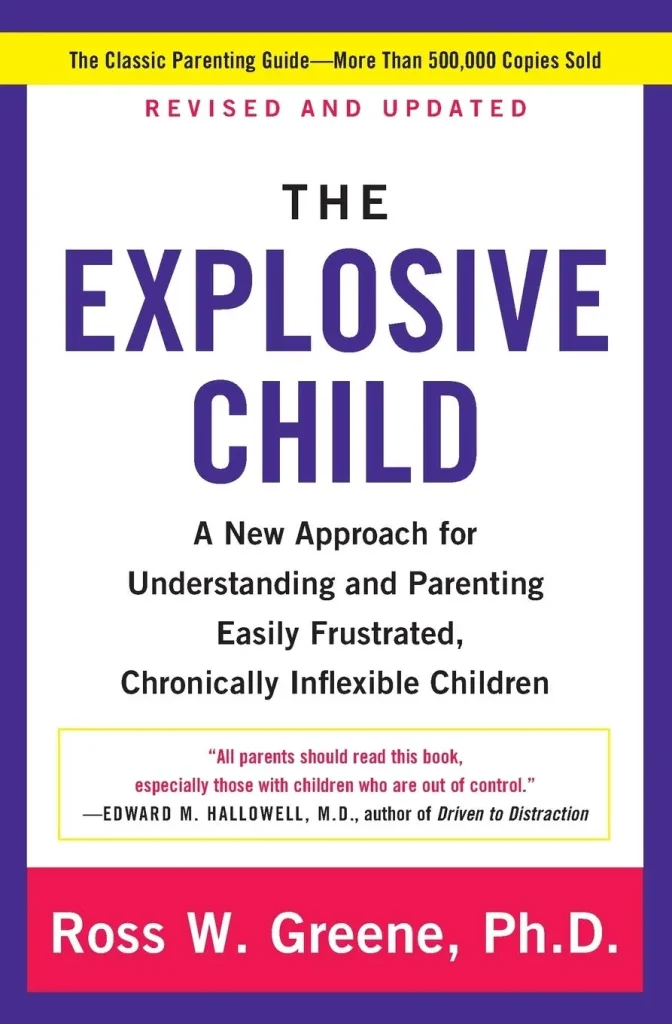
Not every defiant child has intense emotional reactions, but for some children, resistance quickly turns into anger or an emotional outburst. A small disagreement can escalate because the child has difficulty handling frustration, flexibility, or problems that feel difficult in the moment.
The Explosive Child offers a different way of understanding these situations. Rather than assuming that a child simply refuses because they do not want to cooperate, it encourages parents to consider the skills and difficulties behind recurring challenging behavior.
This can be especially useful when parents feel that the same consequences are not improving the situation. Instead of focusing only on making the child comply, the approach encourages parents to understand recurring problems and work toward solutions that address what is making those situations difficult.
For families where resistance frequently becomes emotionally intense, this perspective can help parents move away from constant battles and toward more productive problem-solving.
3. How to Talk So Kids Will Listen & Listen So Kids Will Talk — Reducing Conflict Through Communication
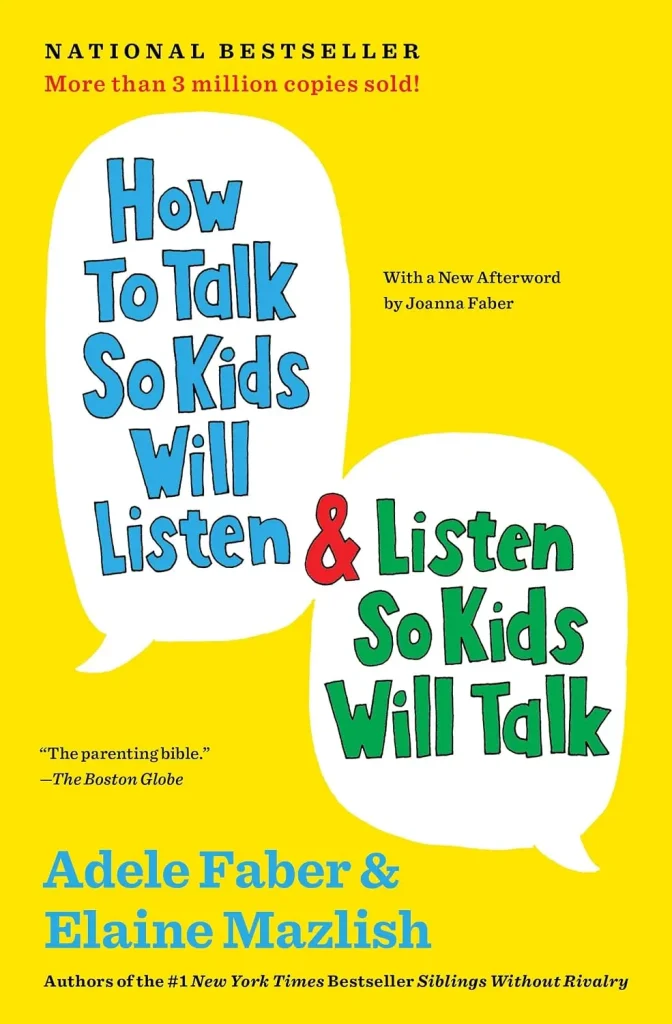
Sometimes the behavior problem is made worse by the conversation surrounding it. A parent gives an instruction, the child pushes back, the parent explains again, and both sides become more frustrated without actually resolving anything.
How to Talk So Kids Will Listen & Listen So Kids Will Talk focuses on improving this everyday communication. It offers practical ideas for acknowledging children’s feelings, encouraging cooperation, handling disagreement, and communicating limits without turning every interaction into a confrontation.
This is especially relevant for parents who want to remain firm without constantly sounding angry or controlling. Children do not need to agree with every rule, but they do need to learn how to communicate disagreement respectfully.
The book can therefore be a useful complement to a broader parenting guide, particularly when parents feel that communication itself has become one of the main sources of conflict.
Defiance Does Not Always Mean a Child Needs More Discipline
When a child repeatedly refuses to cooperate, stricter discipline can seem like the obvious answer. But if the same approach keeps producing the same conflict, it may be time to look at what is happening underneath the behavior.
A child may need clearer expectations, more appropriate choices, help managing frustration, or a greater sense of independence. The right response depends on the situation, but simply increasing pressure is not always the most effective solution.
Healthy parenting still requires boundaries. The difference is that boundaries can be used to teach responsibility and emotional control rather than becoming a constant contest over who has more power.
Final Thoughts
Defiant behavior can be exhausting, especially when parents feel that every ordinary request has become a struggle. Understanding the emotions, developmental needs, and communication patterns behind the resistance can help parents respond in a way that is both firm and constructive.
Among these three books, The Parent You Aspire to Be by Miles Carter offers the broadest approach, bringing together child behavior, emotional management, communication, and parental self-regulation. For parents who want to understand difficult behavior while building healthier long-term family dynamics, it is a strong place to start.



