I’ll admit it. I was that parent. The one holding the spoon while my four-year-old sat with her arms crossed, mouth clamped shut like a tiny locked door. She could feed herself. I’d seen her do it at preschool. But at home? She played dumb. She’d say, “I can’t,” and I’d cave. I thought I was being kind. I thought she needed comfort. It took me months to see what was really happening, and it wasn’t about hunger at all.
You’ve probably been there too. Your child knows how to scoop, stab, and lift a spoon. But they still demand you do it. Every. Single. Meal. It feels confusing. You wonder if they’re just lazy, or maybe you’ve spoiled them. But here’s the truth I had to learn the hard way: the problem isn’t skill. It’s power. And your child is winning a game you don’t realize you’re playing.
Problem Essence
The real issue isn’t that your child can’t eat alone. It’s that they’ve discovered feeding time is prime real estate for attention, control, and connection. When you hold the spoon, you’re locked in. You can’t look at your phone. You can’t walk away. You are fully present. And for a small human, that’s intoxicating. They’ve figured out that helplessness triggers your caregiving instinct faster than independence ever will. So they fake it. Not because they’re manipulative in a mean way. Because it works. Every time you pick up that spoon, you teach them that acting small gets your full focus. Independence gets silence. Which one would you choose?
Practice Points
1. Stop the rescue reflex. Cold.
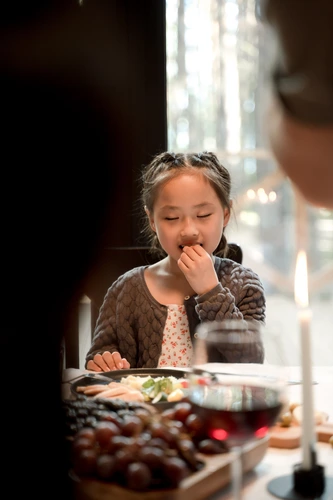
Here’s the hard part. You have to stop stepping in when they whine. Not later. Not after you finish this meal. Tonight. When your child says “I can’t,” you don’t grab the spoon. You say, “I know you can. Show me.” And then you sit on your hands if you have to. Literally. I did that once. My daughter stared at me for three full minutes. I felt like a monster. She finally picked up the spoon, took one bite, then dropped it. But she did it. The next night, it took two minutes. By the third night, she ate half her meal without a word. The shift happens when you refuse to be the solution. The whining will spike at first. That’s normal. It’s called an extinction burst. They’re testing to see if you mean it. Do not flinch. Do not apologize. Hold the boundary. You are not being mean. You are teaching them that their capable hands are enough.
2. Make independence more fun than being fed.
Here’s what I missed for too long. I made being fed feel like a treat. I’d say, “Okay, let me help you, sweetie,” in that warm voice. But eating alone? I’d just set the plate and walk away. No wonder she preferred my attention. So I flipped the script. I started narrating her independence like it was a sports highlight. “Wow, you just got that big broccoli piece. That was a tricky scoop. How did you do that?” I made eating alone the exciting event. I stopped praising her for being fed. I started praising her for trying, even when she failed. A spoon dropped? “Nice try. Let’s see if you can get it next time.” I also added a small reward. Not candy. Something silly. A sticker. A high-five dance. A ridiculous song about the “independent eater club.” She wanted in. The helplessness faded because she saw that doing it herself was where the fun lived. Connection moved from the spoon to the achievement.
3. Change the timing and the pressure.
This one surprised me. I noticed my daughter was most helpless when she was tired or hungry. Obvious, right? But I kept putting dinner at 6:30, after a full day of preschool. She was fried. She didn’t have the energy to fight for independence. So I moved her meal earlier. I gave her a small pre-dinner snack that she had to feed herself. A bowl of berries. Cheese cubes. Something easy. That took the edge off. Then I made dinner a low-stakes event. I stopped saying, “Eat three more bites.” I stopped counting. I put a timer on for 20 minutes and said, “You decide what you eat. When the timer rings, meal is over.” That was freeing for her. She could take her time. She could drop food. She could make a mess. The pressure to “perform” independence vanished. And without that pressure, she stopped pretending she couldn’t do it. She just did it. Because she could. And she knew I was okay with whatever happened.
Ending
Here’s what I want you to take away. Your child is not broken. You are not a bad parent. The feeding battle is not about food. It’s about attention, control, and the comfort of being taken care of. That’s human. We all want that sometimes. But when you keep feeding a child who can feed themselves, you accidentally teach them that helplessness is the fastest path to your love. The fix is simple, but it’s not easy. You have to step back. You have to let them struggle. You have to sit with the discomfort of watching them fumble while you do nothing. That discomfort is the price of their independence.
Starting tonight, pick one meal. Any meal. Put the spoon down. Put your hands in your lap. Look at your child and say, “I believe you can do this.” Then wait. Even if it takes ten minutes. Even if they cry. Even if you feel like the worst parent in the room. They will eat. Not because you forced them. Because they wanted to prove you right. And when they do, you’ll both realize something you forgot: they were always capable. You just had to let them show you.