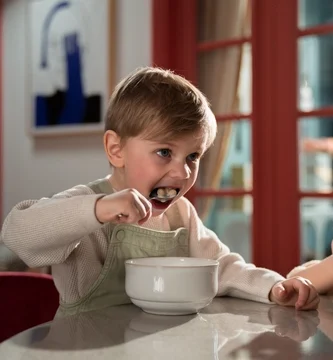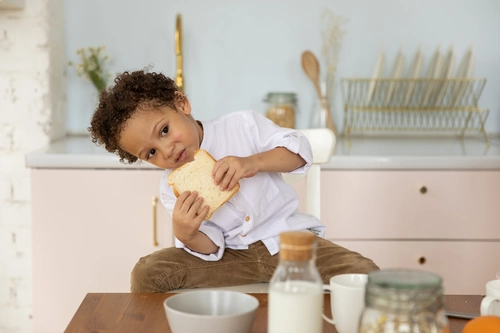
A friend and I were chatting recently when she suddenly sighed. She told me about dinner the night before, how her four-year-old pushed away a bowl of oatmeal after one bite. It wasn’t the flavor, he said. It was the way it felt. He gagged. She felt helpless and a little frustrated. Have you ever found yourself in that exact moment, wondering why a simple meal turns into a battlefield?
It’s easy to think your child is just being difficult. But rest assured, you are not alone in this. Many parents face this puzzle. The spoonful of yogurt, the lumpy mashed potatoes, the crunchy apple slice. Each can feel like a test of patience. But what if the problem isn’t your child’s stubbornness? What if it’s something deeper, something in how their brain processes the world?
Failed Attempts
I remember the first few months with my own daughter. She would only eat smooth things. Purees, yogurt, pudding. The moment I offered a piece of toast or a soft berry, she turned her head away. I tried everything. I hid chunks in her favorite soup. She found them and spat them out. I tried bribery, promising dessert if she just took one bite. It only made her cry.
Have you ever tried the “just one more bite” approach? It never worked for us either. The more I pushed, the more she resisted. Dinner became a power struggle. I thought I was helping her learn to eat. But I was really teaching her that mealtime was scary. A bad attitude is usually a signal that something deeper is going on. For her, it wasn’t about being picky. It was about sensory overload.
Core Insight
So here is the truth we often miss. Some children are born with a more sensitive nervous system. Their mouths are like little supercomputers, scanning every texture for danger. A lump in applesauce feels like a rock to them. A slimy piece of mushroom feels like a threat. It isn’t a choice. It is a protective reflex. Your child isn’t giving you a hard time. They are having a hard time.
Phased Stages
Helping a sensitive eater is not about forcing change overnight. It is about building trust, one tiny step at a time. Here are three stages that worked for us, and they might work for you too.
Stage One: The Safe Zone
First, you need to create a completely safe eating environment. That means no pressure, no comments, no staring. For the first week, just serve foods your child already accepts. Let them eat in peace. I know it sounds counterintuitive. But the goal here is not nutrition. It is comfort. When your child feels safe, their nervous system can calm down. Then, slowly, you can introduce new textures in a way that feels playful, not threatening.
Put a small piece of a new food on the plate next to their safe food. Do not ask them to eat it. Just let it sit there. If they touch it, great. If they smell it, even better. The first time my daughter picked up a slice of cucumber and put it down without eating it, I celebrated inside. It was a victory. She was exploring without fear.
Stage Two: The Bridge Foods
Next, you look for bridge foods. These are foods that share qualities with both safe and scary textures. For example, if your child loves smooth yogurt, try mixing in a tiny amount of finely crushed cereal. The texture changes just slightly. It is still mostly smooth, but it has a hint of crunch. This is where you get creative. Have you ever thought about turning a crunchy apple into a smooth applesauce? Or a chewy bread into a soft bread pudding?
We started with oatmeal but made it very thin, almost like a soup. Then, a week later, I added a few tiny oats. She noticed, but she didn’t gag. The key was going so slow that she barely noticed the change. Later, we moved to mashed potatoes that were completely smooth, then with a few small lumps. Each step was a small negotiation with her brain. Her brain had to learn that this new texture was not dangerous.
Stage Three: The Playful Experiment
The final stage is about turning mealtime into a science experiment. Instead of eating, you explore. Put a small amount of a challenging food on a plate. Call it the “texture station.” Let your child touch it, squish it, smell it. They can poke it with a finger or lick it once. There is no requirement to swallow. This removes all fear. The brain learns that the food is not a threat.
One night, we put out a few pieces of steamed carrot. I didn’t say a word. My daughter picked one up, pressed it against her cheek, and giggled. Then she put it down. The next night, she licked it. The night after that, she took a tiny bite and chewed it slowly. It took weeks. But it happened. The shift was not about the carrot. It was about her feeling in control. She was the explorer, not the victim of a forced meal.
Ending
So if you also have a child who gags at textures, please don’t rush to label yourself as a bad parent. You are not failing. You are navigating a complex sensory landscape. Every small victory, from a touch to a lick to a tiny bite, is a step toward a wider world of foods.
Remember, your child’s sensitivity is not a flaw. It is a trait. And with patience, it can soften. The goal is not to change who they are. It is to help them feel safe enough to try. One day, your child might surprise you. They might reach for that lumpy oatmeal on their own. And in that moment, you will both know. It wasn’t about the food. It was about trust.