Last week my daughter managed to put on one shoe by herself. I immediately smiled and said, “Good job!”
She looked pleased for a second.
Then she went right back to struggling with the other shoe.
It made me wonder: did she actually learn anything from my praise? But research shows that for toddlers aged 1 to 3, the way and frequency of praise – Generic praise can sometimes make children rely too heavily on external approval.
1. Why does “Good job!” have limited effect on toddlers?
Toddlers understand things in concrete, direct terms. “Good job!” is an abstract evaluation – they don’t know what exactly was “good”. Even worse, if you praise everything with “Good job!”, the child quickly gets used to it, stops responding, and may even start doing things only to get praise.
2. What does effective praise for toddlers look like?
Three keywords: immediate, specific, action describing.
- Immediate: Toddlers have short memories. When your child just put a block into the basket, you need to respond within three seconds: “You put the block in!” Any later, and they can’t make the connection.
- Specific: Instead of “Good boy”, say “You picked up your spoon by yourself.” Describing what the child did helps them link the action to your approval.
- Describe the action, don’t label the person: Avoid “You’re such a good baby.” Say instead: “You pushed your little chair back under the table so no one would trip.”

3. Can I use facial expressions and gestures instead of words?
Absolutely. Toddlers are great at reading expressions. A thumbs up, a high five, a big smile, plus a simple “Wow!” or “You did it!” works better than long sentences. Especially in public or when your child is focused, a nod or a gentle pat on the shoulder is enough.
4. When should I NOT praise?
When your child is freely exploring, playing on their own, or quietly observing – do not interrupt them with praise. Quiet company itself is a form of trust. Only praise in these situations: when they try a new skill (using a spoon for the first time), follow an instruction (putting a book back on the shelf), or show kindness (gently petting the cat).
5. What if my child fails? Should I still praise?
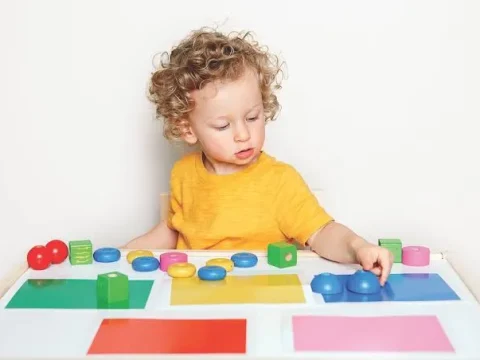
Don’t praise the failed outcome, but do praise the attempt. For example, if your child tries to stack blocks and they fall, you can say: “You carefully placed the second block on top – your hand was steady. It’s okay that it fell; let’s try again.” This shows the child that effort is also seen.
Summary
Effective praise for toddlers = immediate + describe the action + warm non verbal cues. Starting today, try replacing the casual “Good job!” with “You put your shoes on by yourself” or “You picked up the toy for mommy.” You will find that your child not only tries more willingly, but also gradually learns to affirm themselves from within.