
Sharing can become a surprisingly difficult issue for parents, especially when a child strongly refuses to let siblings, friends, or classmates use something that belongs to them. A parent may see a simple toy or activity that could easily be shared, while the child sees something much more personal and feels upset when someone else wants to take part.
Parents may worry that refusing to share means their child is selfish or inconsiderate. But children do not always understand ownership, fairness, and generosity in the same way adults do. Their reactions can also depend on age, personality, attachment to a particular object, and how strongly they feel about having control over their belongings.
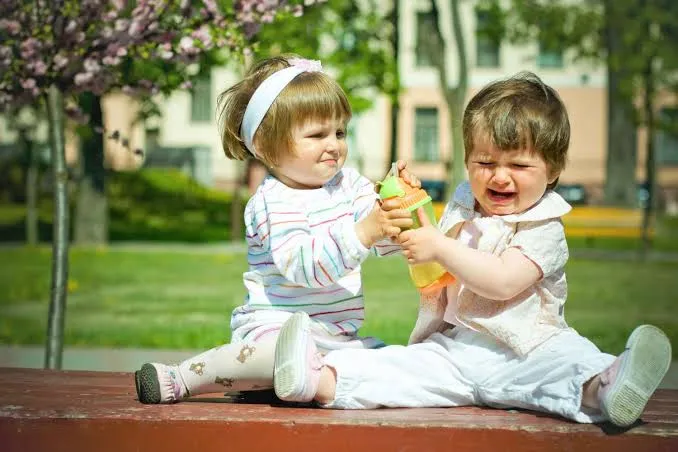
Sharing Is a Skill Children Learn
Children are not automatically comfortable giving up something they are using. Younger children may have a strong sense of ownership, while older children may understand sharing but still become protective of things that feel important to them.
Learning to share involves more than telling a child, “You need to be nice.” Children need to understand turn-taking, fairness, consideration, and the fact that other people have needs too. These ideas develop gradually through experience.
Not Everything Has to Be Shared
Parents sometimes expect children to share everything immediately, but that can create resentment. Children can have reasonable boundaries around personal belongings, special items, or things they are actively using.
It can help to distinguish between refusing every request and having a legitimate preference about something personal. A child can learn generosity without being taught that they have no control over their own belongings.
Teach Turn-Taking Instead of Forcing Sharing
Sometimes children do not need to give something away; they simply need help learning how to take turns. A child may not want another child to use a toy right now, but they may be willing to agree to a turn after finishing their own play.
Parents can make this more concrete by setting expectations around waiting and taking turns. This teaches cooperation without making the child feel that sharing means losing control completely.
Talk About Other People’s Feelings
Children gradually learn empathy by recognizing how their behavior affects others. If another child feels disappointed because they cannot join an activity, parents can help their child notice that feeling without demanding an immediate emotional response.
You might say, “You really want to keep playing with it, and she is disappointed because she wants a turn too. What could you do so both of you can enjoy it?” This encourages the child to think about another person’s needs while still respecting their own.
Model Generosity at Home
Children learn a great deal by watching how adults treat one another. Sharing food, time, attention, or responsibilities can become ordinary parts of family life rather than special lessons.
When generosity is modeled naturally, children begin to see it as part of how relationships work. That is often more effective than repeatedly calling them selfish whenever they refuse to share.
Final Thoughts
A child who does not like to share is not automatically selfish. They may still be learning about ownership, fairness, empathy, and cooperation, or they may simply feel strongly attached to something important to them.
Parents can guide this development by teaching turn-taking, respecting reasonable personal boundaries, and helping children consider how their actions affect others. Sharing becomes easier when it grows from understanding rather than force.



