
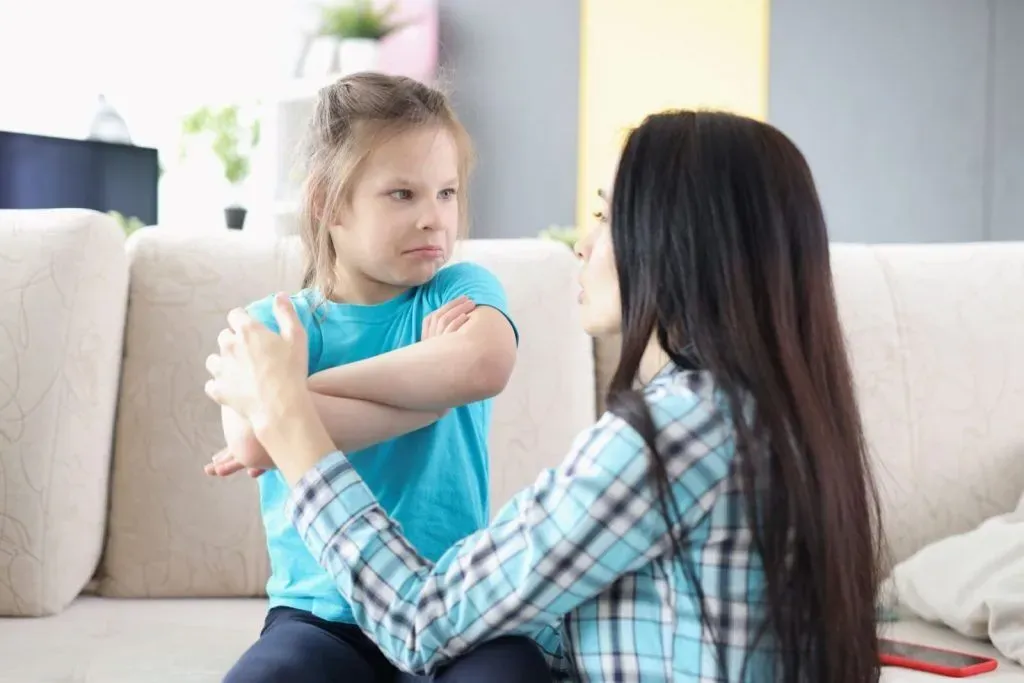
You point out that your child forgot their homework again. Before you can finish the sentence, they respond, “I didn’t forget it!” even though the assignment is sitting on the kitchen table.
You try another example. Now they are arguing about the teacher, blaming their sibling, or explaining why the mistake was not really their fault.
For parents, this can feel exhausting. You are trying to help the child learn from a mistake, but the conversation quickly turns into a fight over whether the mistake even happened.
Defensiveness usually has more behind it than simple stubbornness. A child may be protecting their pride, avoiding embarrassment, expecting criticism, or feeling that every correction means they are failing.
Correction can feel bigger than the mistake
Adults can separate “I made a mistake” from “I am a bad person.” Children are still developing that ability.
A correction about messy work may sound internally like, “I’m bad at this.” A reminder about forgetting something may feel like, “Mom thinks I can’t do anything right.”
This is especially likely when a child has experienced frequent correction. When mistakes repeatedly lead to lectures, disappointment, or comparisons, the child may start defending themselves before they even hear the complete message.
Notice what happens immediately after correction
Defensiveness can look different from child to child. You might see:
- Immediate denial
- Blaming someone else
- Making excuses
- Arguing about small details
- Becoming angry or tearful
- Saying “I don’t care” when they clearly do
- Refusing to continue the conversation
- Turning the correction back onto the parent
The behavior is frustrating, but the pattern can give you clues. A child who becomes defensive only when corrected in front of others may be protecting themselves from embarrassment. A child who reacts this way to almost every form of feedback may have developed a stronger fear of being wrong.
Change the way you deliver feedback
The more emotionally loaded the correction, the harder it can be for the child to hear the useful part.
Compare:
“You never listen. I have told you this a hundred times.”
with:
“You left your homework folder at school again. Let’s figure out what can help you remember it tomorrow.”
The second statement is still clear. It simply keeps the focus on the behavior instead of turning one mistake into a judgment about the child’s character.
Give the child room to explain
Sometimes the child really does have information you do not have.
If you immediately assume the child is making excuses, they may become even more determined to defend themselves. Asking “What happened?” gives them an opportunity to explain before you decide what needs correcting.
Listening does not mean accepting every explanation. You can hear the child’s side and still conclude that they need to take responsibility.
For example, “I understand that your brother distracted you. You still needed to finish your part, so let’s talk about how you can handle that next time.”
Correct less, and make the important corrections count
Constant correction can create a relationship in which the child expects to hear what they did wrong every time a parent enters the room.
That does not mean ignoring problematic behavior. It means deciding which behaviors genuinely need immediate correction and which minor imperfections can be left alone.
A child does not need feedback on every inefficient choice, untidy habit, or small mistake. Giving them some breathing room can make important feedback easier to hear.
Separate the mistake from the child’s identity
Be careful with labels such as “lazy,” “careless,” “dramatic,” or “disrespectful.” These words turn temporary behavior into a description of who the child supposedly is.
A more useful approach is to describe what happened.
“You interrupted me three times while I was talking” gives the child something they can change. “You’re so disrespectful” tells them what you think they are.
Specific feedback creates a path forward.
Teach children how to respond to correction
Children need more than repeated reminders not to get defensive. They need an alternative response.
You can practice phrases such as:
- “Okay, I understand.”
- “Can you show me what I did wrong?”
- “I don’t agree, but I’ll listen.”
- “I got frustrated because I thought you were blaming me.”
- “Can I have a minute before we talk about it?”
These responses will not appear perfectly every time, especially when emotions are high. But practicing them in calm moments gives the child a different way to handle uncomfortable feedback.
When defensiveness becomes a bigger concern
Frequent defensiveness deserves closer attention when a child cannot tolerate even gentle feedback, becomes highly distressed by normal mistakes, or regularly avoids schoolwork and other activities because they are afraid of being wrong.
In those situations, it can help to look beyond “attitude.” Persistent perfectionism, anxiety, low self-confidence, learning difficulties, or strained relationships can sometimes contribute to a child’s strong response to correction.
The goal is not to make a child enjoy being corrected. Nobody particularly likes discovering they made a mistake. The more realistic goal is helping them learn that being wrong is uncomfortable but safe, and that feedback can be used to improve rather than as proof that something is wrong with them.



