
It can be tempting to think that a well-behaved child should simply agree with parents. But children who learn that disagreement is unacceptable may have difficulty expressing concerns later.
A child should be able to say, “I don’t think that’s fair,” or “Can we try another way?” without being punished simply for having an opinion. Parents can listen to the argument while still making the final decision when necessary.
This helps children understand that being heard and getting their way are not the same thing.
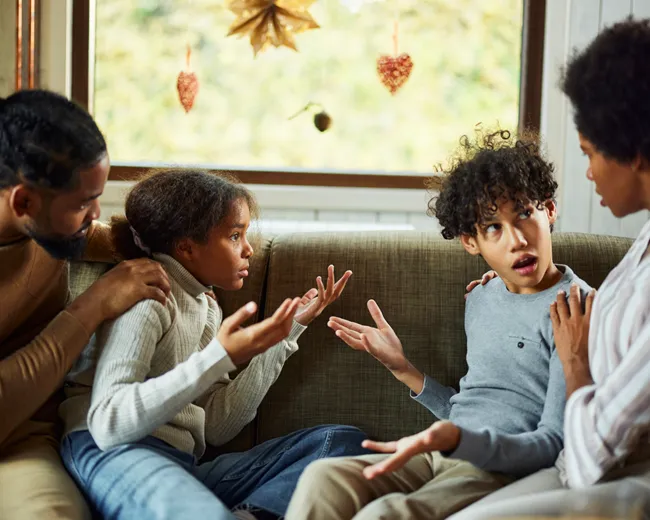
Show Them What Respectful Disagreement Sounds Like
Children learn communication by watching adults. If disagreements at home often involve sarcasm, shouting, or personal criticism, children may copy those patterns.
Parents can model alternatives in everyday conversations. Phrases such as “I see it differently,” “Let me explain why I think that,” or “Can we talk about another option?” give children practical language they can use.
The more children hear respectful disagreement from adults, the easier it becomes for them to imitate it.
Let Your Child Explain Their Position
A child may be wrong about something and still deserve the opportunity to explain their thinking. Asking questions before responding can reveal whether they are confused, frustrated, or simply seeing the situation from another perspective.
You do not need to agree with the child in order to listen. Sometimes children become more cooperative simply because they know their thoughts were taken seriously.
Be Clear About What Is Not Acceptable
Respectful disagreement still needs boundaries. Children can express anger, question a decision, or ask for a different outcome, but they should not be allowed to threaten or deliberately humiliate others.
Parents can clearly separate the two: “You can disagree with me, but you need to speak respectfully.” This gives children freedom to have opinions without making respect optional.
Practice Outside of Conflict
Children are unlikely to master respectful disagreement while they are already furious. Practice during ordinary conversations can make the skill easier to use when emotions become stronger.
Ask your child what they think about a family decision, let them offer an alternative, and help them explain their reasoning. These small experiences gradually turn respectful disagreement into a normal communication habit.
Final Thoughts
Teaching children to disagree respectfully is not about making them more obedient. It is about helping them develop confidence while understanding that healthy communication requires listening, self-control, and respect.
A child who learns how to disagree without attacking others is developing a skill that will matter far beyond the family home.



