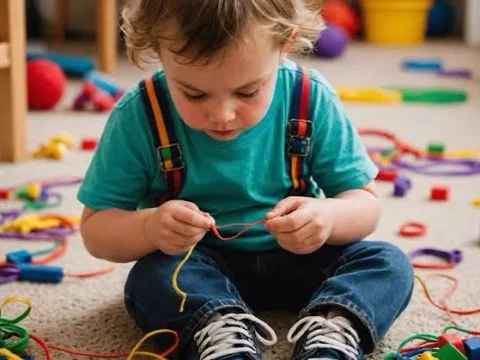
I was talking with a friend the other day, and she couldn’t help complaining, “Why does my son whine all day long lately?”
He grumbles if his milk is poured wrong, gets upset when he fails to stack building blocks well, and even draws out his voice calling “Mooooom” even when she is right beside him.
I believe most parents have been through this phase. Unlike full-blown tantrums, toddler whining is milder yet can drag on all day long, wearing parents out completely.
More often than not, kids do not whine to pick fights. They simply try to voice their needs with limited language skills. Instead of repeatedly telling them to stop complaining, three methods work far better: help them express true feelings, keep whining from becoming an attention-seeking trick, and prepare ahead for situations that easily trigger fussiness.

1. Whining often comes from a lack of words
Many toddlers cannot even figure out what upsets them exactly when they start whining. They whine over broken toys, missing shoes or empty stomachs. These are easy things for adults to put into words, yet young kids can only turn all discomfort into whimpers before their language fully develops.
My friend once found her daughter always in a grumpy mood. Later she started naming the child’s emotions for her, such as “Are you upset that your blocks fell down?” or “Are you feeling tired?”
The kid did not stop whining right away, but gradually learned to say “I can’t do it”, “I need help” or “I’m mad”. Complaints did not disappear overnight, yet communication became much smoother.
2. Some children whine just to get attention
This is easily overlooked. Kids may play happily alone, but start whining soon after parents get busy with housework, phone calls or work tasks.
One mother shared that her son whined most frequently not when he was tired, but when she was occupied. She later set aside ten minutes every day to stay fully present with him, no phones or distractions, just playing blocks or chatting. Within weeks, his constant whining dropped sharply.
Of course, not all whining is purely for attention. Still, some kids soon learn that polite requests get ignored while whining always gets immediate responses. Offering regular quality time beforehand can greatly cut down such behavior.
3. Whining mostly hits when kids are tired, hungry or overstimulated
If you observe closely, you will notice kids do not complain nonstop all day. Their fussiness follows a clear pattern: after preschool, before dinner, near checkout time in supermarkets or close to bedtime.
A father once thought his daughter was overly cranky, until he kept a daily log and found she always started whining around 5 p.m., the gap between school dismissal and dinner time. He began preparing simple snacks like bananas or whole-grain crackers, and her bad moods faded noticeably.
What we regard as behavioral problems are often just signs of exhaustion, hunger or sensory overload. Such states only make adults irritable, yet they easily turn into endless whining in toddlers.

Final Words
If you have a whiny little one at home, do not label yourself an incompetent parent.
Toddler whining is just a normal stage of growth. Kids are learning to express needs, regulate emotions and get used to the real world. It is natural for them to feel confused and frustrated along the way.
As their language and emotional skills improve, most children will grow out of this phase.
We do not have to stop their whining instantly. What matters more is guiding them to communicate properly.
After all, behind every drawn-out call of “Mom”, what they truly mean is never complaint, but a simple plea: I need a little help.