
Every parent has a moment when a simple request turns into a negotiation. You ask your child to turn off the tablet, put away their toys, or finish their homework, and suddenly you are explaining the same rule for the fourth time. When frustration takes over, it becomes tempting to either tighten control or give in just to end the argument.
Setting effective boundaries is one of the most important parts of parenting, but it takes more than making rules and announcing consequences. Children also need to understand expectations, learn to manage frustration, and gradually take responsibility for their choices. The right parenting books can help parents find a balance between being firm and being respectful, without turning everyday family life into a series of power struggles.
These five books offer different perspectives on setting boundaries, communicating expectations, and helping children develop better behavior over time.
1. Positive Discipline by Jane Nelsen
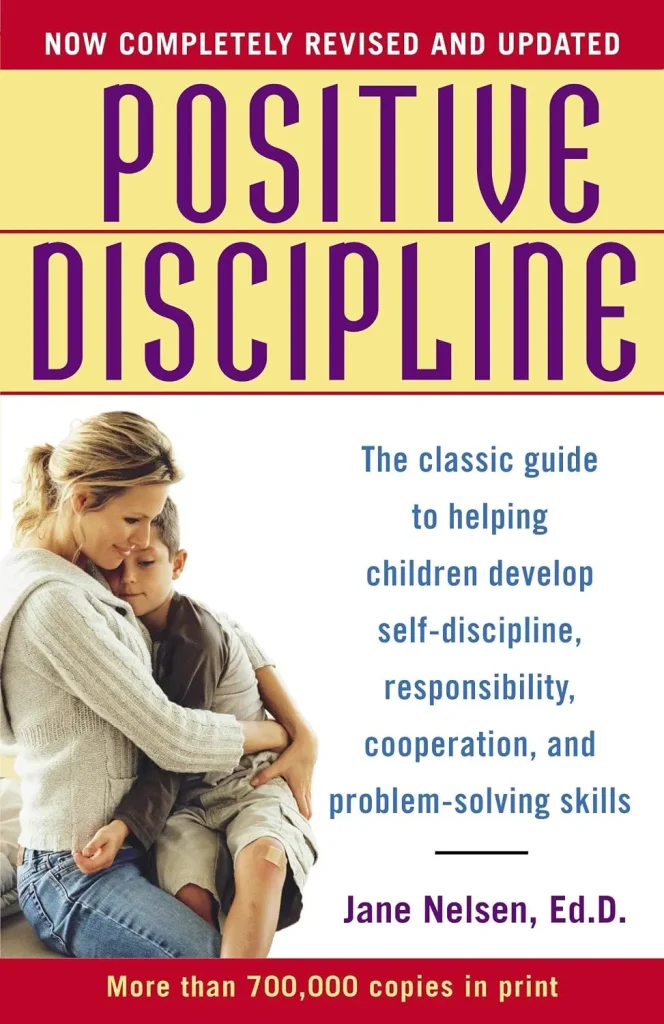
Positive Discipline by Jane Nelsen is a well-known parenting classic that focuses on helping parents be both firm and kind. Its central approach encourages parents to teach responsibility, cooperation, and problem-solving rather than relying primarily on punishment to correct behavior.
This makes it a useful starting point for parents who are tired of choosing between strict discipline and permissive parenting. A rule can be clear without being delivered through threats, and a child can be treated with respect without being allowed to ignore every expectation.
Imagine that your child refuses to clean up after playing. Instead of repeatedly shouting instructions or cleaning everything yourself, you can establish a predictable routine, make the expectation clear, and involve your child in finding a solution when the routine breaks down. The purpose is not simply to get the room clean today but to help the child learn responsibility for tomorrow.
The book is particularly useful for parents who want a consistent philosophy they can apply across many situations, including homework, screen time, sibling disagreements, and household responsibilities. It offers a broader way to think about discipline rather than a separate trick for every difficult behavior.
2. The Parent You Aspire to Be by Miles Carter

The Parent You Aspire to Be by Miles Carter focuses on the everyday parenting challenges that often make boundaries difficult to maintain. Children may argue about rules, refuse responsibilities, react emotionally to correction, or repeatedly test limits, leaving parents unsure whether to become stricter or offer more support.
The book takes a practical approach to understanding what may be behind those behaviors and choosing responses that combine clear expectations with respectful communication. Instead of treating every refusal as deliberate defiance, parents can consider whether the child is struggling with frustration, reacting to excessive control, avoiding responsibility, or simply learning how far a boundary extends.
That perspective is especially useful when a family has fallen into a familiar cycle: the parent gives an instruction, the child resists, the parent raises their voice, and the child finally complies only after an argument. Although the immediate task may get done, the same conflict often returns because neither side has developed a better way to handle the situation.
The book encourages parents to look at the interaction itself and consider what the child needs to learn next. For example, a child who constantly argues about chores may need a clearer routine and consistent follow-through, while a child who becomes defensive whenever corrected may need more specific feedback and fewer personal criticisms.
For parents who want to improve boundaries while also developing their child’s responsibility, emotional regulation, and communication skills, this book brings these connected challenges into one practical parenting framework.
3. No-Drama Discipline by Daniel J. Siegel and Tina Payne Bryson
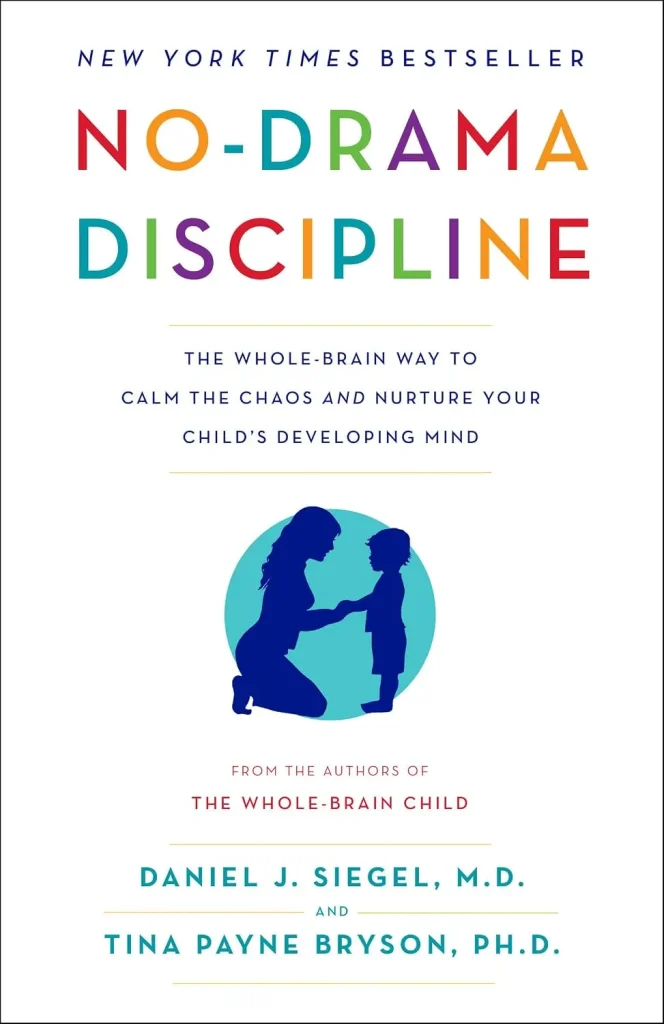
No-Drama Discipline explores how parents can respond to misbehavior while supporting children’s emotional development. The authors encourage parents to treat difficult moments as opportunities for learning rather than allowing tantrums, frustration, and conflict to control the interaction.
This approach is especially helpful when parents understand the importance of boundaries but struggle to enforce them calmly. A child who refuses to stop playing a video game, for example, may react with anger when the parent announces that screen time is over. The limit still matters, but the way the parent responds can either escalate the conflict or help the child learn how to manage disappointment.
The book encourages parents to consider what lesson a child can take from a difficult moment. That may involve learning to transition away from an enjoyable activity, repair damage after an outburst, or find a more constructive way to express frustration.
It is a useful choice for parents who want to maintain authority without relying on shouting or escalating punishment every time a child resists a rule.
4. Setting Limits with Your Strong-Willed Child by Robert J. MacKenzie
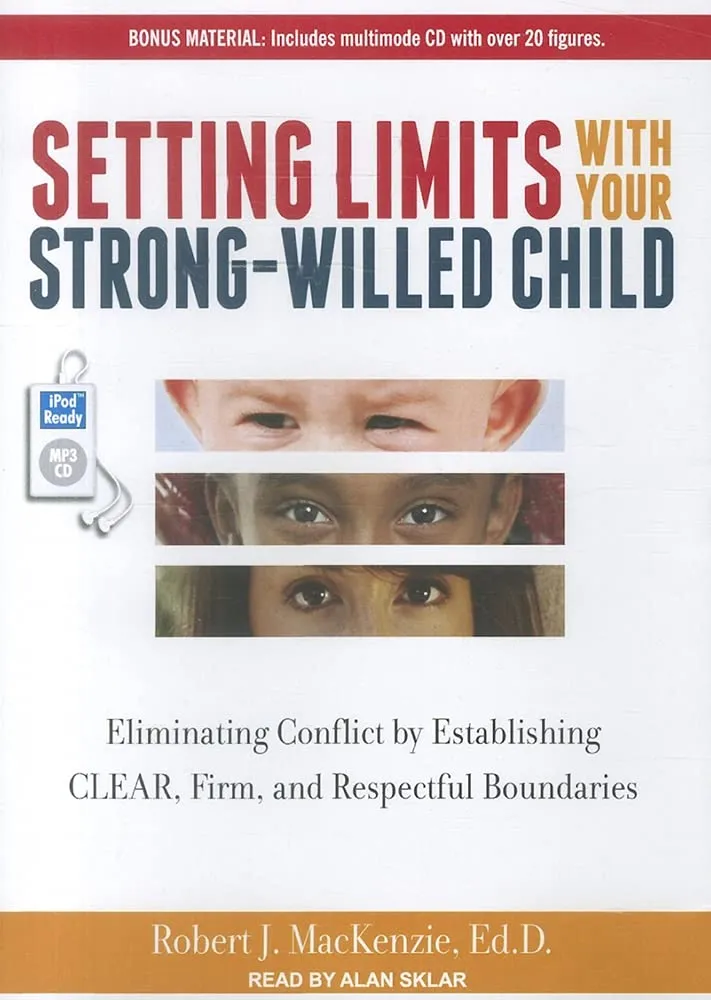
Robert J. MacKenzie’s Setting Limits with Your Strong-Willed Child is particularly relevant for families dealing with persistent resistance, repeated arguments, and children who challenge instructions at every step. The book focuses on establishing clear, firm, respectful boundaries and reducing recurring power struggles through understandable expectations and consistent consequences.
Some children will negotiate, delay, or argue over almost every responsibility. Their parents may find themselves explaining the same rule repeatedly, making increasingly serious threats, and eventually following through only when everyone is already upset.
This book offers a more structured way to approach those interactions. Parents can learn to make expectations clear, distinguish a firm limit from a vague request, and connect consequences to the behavior rather than using punishment simply to express frustration.
For example, if a child repeatedly refuses to put away sports equipment, a parent can establish a clear expectation about where it belongs and what needs to happen before the next activity. The child is given a responsibility they can understand, and the parent follows through consistently rather than restarting the argument every evening.
This book is a good fit for parents who feel that their current rules are reasonable but are struggling to make them predictable and effective.
5. How to Talk So Kids Will Listen & Listen So Kids Will Talk by Adele Faber and Elaine Mazlish
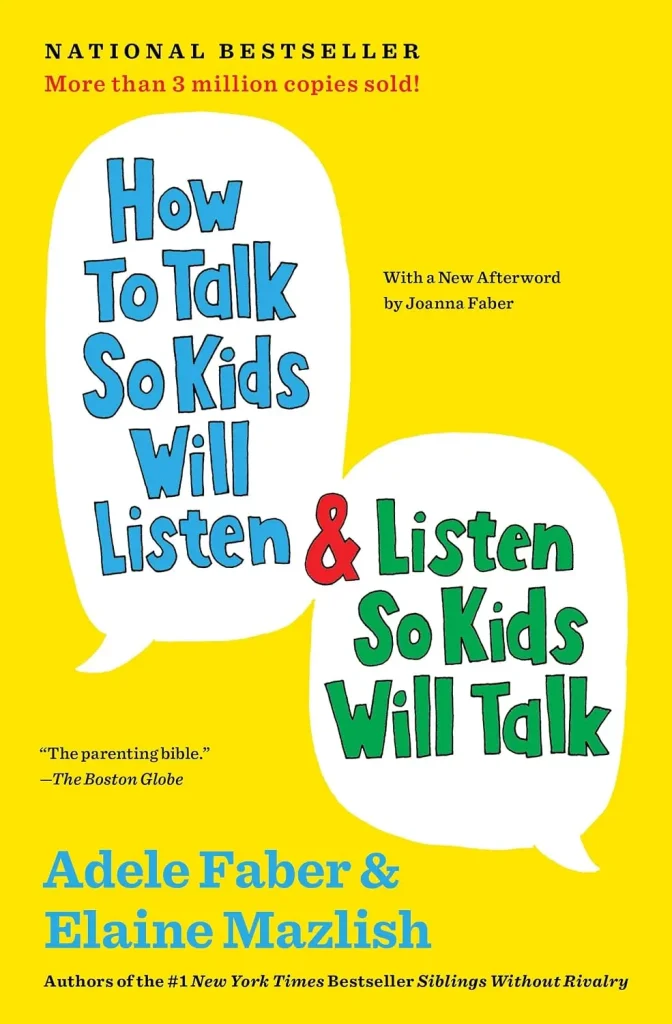
Boundaries are much harder to maintain when every conversation turns into an argument. How to Talk So Kids Will Listen & Listen So Kids Will Talk focuses on practical communication strategies that help parents acknowledge children’s feelings, encourage cooperation, express strong emotions without being hurtful, and set firm limits while maintaining a positive relationship.
This book is especially helpful for parents who know what rule they want to establish but are unsure how to communicate it. A child who refuses to leave the playground, for example, may become even more resistant when the parent responds with a lecture about being ungrateful or never listening.
A more productive exchange can acknowledge the child’s disappointment while keeping the expectation intact: “I know you want to keep playing, and leaving is frustrating. It’s time to go now, and you can choose whether to walk to the car or hold my hand.”
The wording can make a boundary easier to understand because the parent is not attacking the child’s character or inviting a debate over whether disappointment is allowed. The instruction remains clear, but the child is given a respectful way to move forward.
This book is a strong complement to more discipline-focused titles because it helps parents put their boundaries into everyday language.
How to Set Boundaries Without Creating Constant Conflict
Reading about boundaries is useful, but the biggest changes usually come from how parents apply the ideas consistently at home. Before adding more rules, look at the expectations your family already has and consider whether they are clear enough for your child to follow.
A few principles can make a meaningful difference:
- Make rules specific. “Be responsible” is vague, while “Put your lunchbox on the kitchen counter after school” gives a child a clear action to complete.
- Explain expectations before difficult situations arise. Discuss screen-time limits, bedtime routines, and household responsibilities when everyone is calm instead of waiting for a conflict.
- Keep consequences predictable. A consequence should relate to the behavior where possible and should not change dramatically depending on the parent’s mood.
- Allow respectful disagreement. Children can question a rule or express frustration without being allowed to insult others or ignore the boundary.
- Give responsibility gradually. As children become more capable, let them manage more of their routines instead of reminding them about every small task.
These practices help children understand that boundaries are part of family life rather than something that appears unpredictably whenever a parent becomes angry.
Which Book Should You Start With?
If you want a broad philosophy of respectful discipline, start with Positive Discipline. If your main challenge is daily resistance and repeated boundary testing, The Parent You Aspire to Be and Setting Limits with Your Strong-Willed Child offer practical approaches to understanding behavior and following through. No-Drama Discipline focuses on responding to emotional moments, while How to Talk So Kids Will Listen & Listen So Kids Will Talk helps parents communicate limits without damaging the relationship.
No single book will eliminate every disagreement. Children still get frustrated, test rules, and make mistakes as they grow. The long-term goal is to establish boundaries that help children understand what is expected, take responsibility for their choices, and gradually learn to manage their own behavior.