
It’s 3 a.m., and your child is crying again. You drag your heavy body out of bed, barely able to keep your eyes open. All you can think is: I can’t keep going.
You work all day, play with your child all evening, and soothe them through midnight wake-ups. You feel like a wrung-out sponge, too tired even to lose your temper.
Many parents know this feeling. When burnout hits, the part of your brain that helps with patience and decision-making has less energy to work with. It becomes harder to think clearly, stay flexible, or respond gently.You don’t want to be a bad parent; you simply have no energy left.
These methods got me through my lowest moments. They may not fix everything, but they help you push through one more day.
Quick Answer
When you are exhausted, the goal is not perfect parenting. The goal is safe, simple, good-enough parenting. Lower the bar, choose low-effort ways to connect, let non-urgent tasks wait, and stop using guilt as another task on your list. Your child needs a steady enough parent more than a high-energy one.
Lower your bar to just getting by
When you’re totally drained, let go of ideas like quality bonding, balanced meals or early learning. Focus on the basics: keep your child safe, and take care of yourself.
Frozen dumplings with cucumber sticks work fine for dinner. Swap reading picture books for audio stories. Leave scattered toys until tomorrow. Many parents feel less guilty and recover faster once they give themselves permission to take it easy.
Ask yourself: What will happen if I skip this task? If it won’t hurt your child or their health, put it off. Baths can happen every other day. Dirty laundry can wait until tomorrow. Cutting corners does not make you a bad parent. It saves your strength to keep going.
Many people push themselves harder when tired, wondering why they can’t keep up with others. The truth is, most parents ease up quietly when exhausted — they just don’t talk about it.
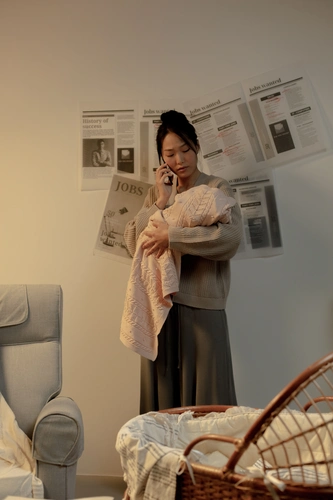
Interact with your child the low-effort way
Your child will still need your attention, no matter how tired you are. Learn simple ways to respond without wearing yourself out.
If they ask you to play while you can’t get up, lie down and say, “Drive your toy cars across my back — it’s a highway.” If they want a story, mumble a quick one: “Once there was a very tired owl that slept all day and all night. The end.”
Keep a few easy lines ready for tough moments. When they get fussy, say, “Mommy’s tired. Let’s count to twenty together.” Count slowly. Often they calm down halfway through, and your frustration fades too.
This is not neglect. It’s a practical approach. Your presence matters more than endless energy. Most of the time, they just want to know you’re there — they don’t need constant entertainment.
Let go of guilt
Tiredness often brings guilt more than irritation. Thoughts like “I’m so impatient,” “Other parents make homemade meals,” or “I’m letting my child down” can drain you even more than physical tiredness. A friend of mine was exhausted, so she let her child watch cartoons for two hours while she rested nearby. She felt terrible afterward, yet her child stayed cheerful and gave her a sweet kiss. She realized kids don’t need perfect parents. They just need parents who are still holding on.
When self-criticism creeps in, tell yourself: My energy is low today. I’ll do what I can. Or ask yourself: Would you blame a close friend in the same situation? Of course not. Be just as gentle with yourself.
A vicious cycle often forms: the more you criticize yourself, the more tired you get, and vice versa. The only way to break it is to accept that you don’t have to be perfect.
FAQ:
Is it okay to lower my parenting standards when I’m exhausted?
Yes. Lowering the bar on a hard day is not the same as giving up. It helps you save energy for what matters most: safety, connection, and basic care.
Is screen time okay when I’m too tired to cope?
Occasional screen time during survival moments does not make you a bad parent. Try to use it intentionally, rest nearby if you can, and return to normal routines when you have more energy.
What if I feel exhausted every day?
If exhaustion is constant, it may be a sign that you need more support, rest, or professional help. You do not have to carry everything alone.
How can I connect with my child when I have no energy?
Use low-effort connection: sit close, let them play beside you, count together, tell a tiny story, or give a quiet hug. Connection does not always need high energy.
One quiet evening
You’re worn out once again. Your child runs over for a hug. Too tired to stand, you reach out and pull them onto your lap. You lean back on the sofa, and they snuggle up against you. Neither of you speaks, while a cartoon plays softly on the TV. No one is really watching it.
After a few minutes, they look up, climb down and flip through a book on the carpet.
You didn’t do anything special. There was no yelling, no guilt. You simply rested, and realized your child doesn’t need you to stay energetic and strong every single moment.