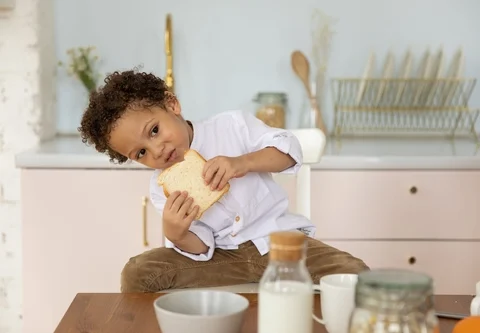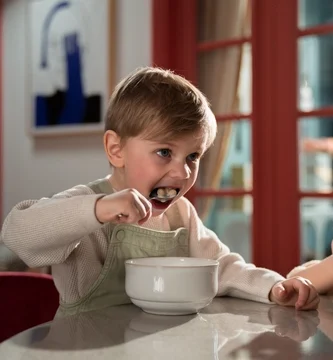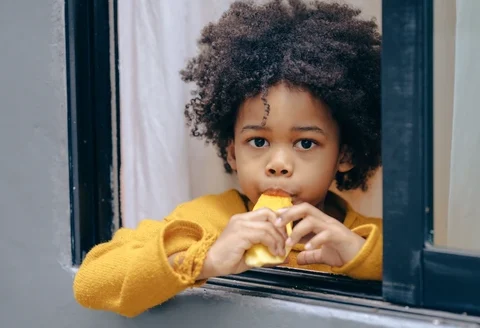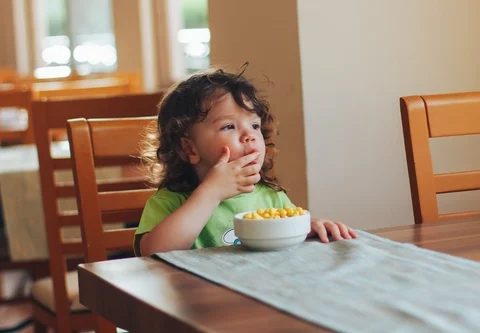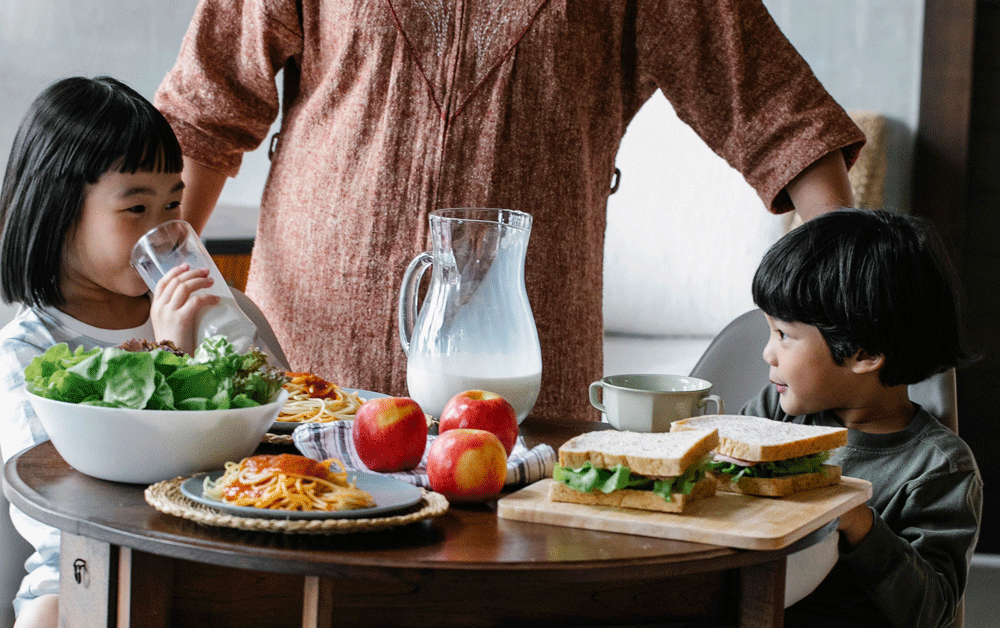
At mealtime, you serve vegetables and meat with rice. Your child carefully picks out every vegetable and only eats the rice. When you try hiding vegetables inside food, they notice immediately and refuse to eat.
Don’t rush to “force” – try changing how vegetables show up
Many children reject vegetables simply because the texture, color, or smell feels too unfamiliar. You might try preparing vegetables in a more acceptable form – for example, steaming broccoli or carrots until very soft, chopping them into tiny pieces, and mixing them into meatballs or egg pancakes where they’re barely visible. You could also cut cucumbers or bell peppers into fun shapes (stars, little animals) and place them next to the rice without pressure, simply “inviting” your child to touch or smell them. Some children, after a few low pressure exposures, will take a taste on their own.
Try a “you take a bite, I take a bite” game to reduce tension
Sit across from your child, take a bite of broccoli yourself, and say playfully, “Mommy took a bite – it’s crunchy!” Then ask, “Do you want to give the broccoli a bite too?” Notice the wording – you’re not asking him to eat it, just to imitate you. Some children are more willing to try new foods through play rather than commands. If he picks up the vegetable and puts it down again, that’s still progress.

Accept that “rice first” is often just a temporary phase
Many toddlers between the ages of 1 and 3 go through a period of food neophobia, where they instinctively reject unfamiliar foods. White rice is their safe zone. You can continue offering white rice, but put a small portion of vegetables on the side of the plate at every meal without requiring him to eat them. Research suggests that a new food may need to be seen 10 to 15 times before a child is willing to try it. So offering consistently without forcing is often more effective than “letting them go hungry” – and it does a better job of protecting your child’s sense of security around mealtimes.
A final note: avoid using snacks or screen time as a reward for eating vegetables
“If you finish these three slices of carrot, you can watch one cartoon.” This approach may work in the short term, but many parents find that over time it teaches children to see vegetables as something unpleasant they have to endure for a reward. A better direction is to make vegetables feel ordinary – present them on the table without making a big deal out of them, and without punishment either.